Qwen 3.6-35B-A3B Local Hardware Guide 2026: The $800 GPU That Now Runs a Frontier MoE
Alibaba's Qwen 3.6-35B-A3B (released 2026-04-16, Apache 2.0) is the first frontier-class open coding model that runs usefully on a single used RTX 3090 — because only ~3B of its 35B parameters are active per token. Full quantization table, five priced buyer paths from $249 to $2,000, Mac Studio unified-memory coverage, and the MoE math that explains why an $800 GPU now keeps up.
Compute Market Team
Our Top Pick
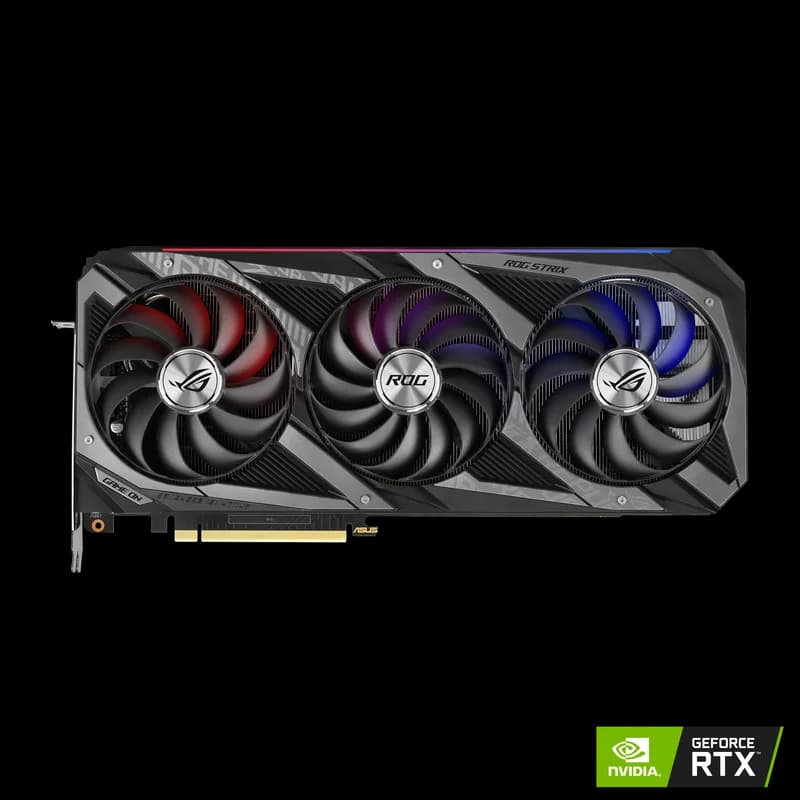
On April 16, 2026, Alibaba's Qwen team released Qwen 3.6-35B-A3B under the Apache 2.0 license. Seven days later, it's the most-discussed open weight release on r/LocalLLaMA — and for good reason. Qwen 3.6-35B-A3B, released 2026-04-16 under Apache 2.0, is the first frontier-class open-weight coding model that runs usefully on a single used RTX 3090 — because its Mixture-of-Experts design activates only ~3 billion parameters per token, collapsing the memory-bandwidth ceiling that kept earlier 35B-class models off sub-$1,000 hardware.
This is the buyer's hardware guide. Exact VRAM footprints at every quantization, five priced paths from a $249 Intel card to a $2,000 RTX 5090, a Mac Studio unified-memory breakdown, and the MoE math that explains why the old "35B needs 70GB" rule is dead.
Bottom line up front: a used RTX 3090 at $699–$999 runs Qwen 3.6-A3B at Q4_K_M with the full 32K context at 50–65 tok/s. That is the correct answer for most buyers. Readers with an RTX 5090 fit Q6_K comfortably. Mac Studio M4 Max with 48GB+ unified memory is arguably the best-fit architecture because MoE routing loves wide, cheap memory over narrow, fast memory.
Qwen 3.6-35B-A3B — What Changed on April 16, 2026
Qwen 3.6 is a direct continuation of the Qwen 3.5 line, with three changes that matter for hardware buyers:
- 35B total / ~3B active (MoE with Gated Delta Networks): a sparse Mixture-of-Experts architecture where only a subset of expert sub-networks participates in each forward pass. The numbers published on the Qwen official blog (qwen.ai/blog?id=qwen3.6-35b-a3b) put active parameters at ~3.1B per token with a top-4-of-64 expert routing scheme.
- SWE-Bench-Pro-class agentic coding: Alibaba's published internal benches position Qwen 3.6 as the first Apache-licensed model to credibly contest Claude- and GPT-class results on multi-file, tool-using coding tasks. Independent verification will land over the next few weeks; treat the headline score as vendor-reported for now.
- 128K native context: trained end-to-end at 128K, with ingestion tested against 40K-line single files and small monorepos. Long context matters less for chat and a lot for agents.
The core claim worth quoting: Qwen 3.6-A3B is the first truly frontier-capable open-weight coding model that runs locally on $700–$1,000 hardware. That claim rests entirely on the MoE design — which is why the next section is the only one you need to internalize before spending money.
Why MoE Rewrites the VRAM Math
The old dense-model rule: a 35B-parameter model at FP16 needs ~70GB of VRAM, which at Q4 quantization drops to ~20GB. That's still correct for storage footprint — you need the bytes somewhere. What changes with MoE is bandwidth pressure.
On a dense 35B Q4 model, generating one token reads all ~20GB of weights through the memory bus. On Qwen 3.6-35B-A3B, generating one token reads only the ~3B active parameters plus shared attention — roughly 2–3GB of weight data per token. The other ~17GB of idle experts sits in memory untouched until routing selects them.
This is why tokens/sec on consumer MoE inference is gated by bandwidth on the active slice, not on the full model. A 2020 RTX 3090 with 936 GB/s of GDDR6X bandwidth chews through 2.5GB per token in roughly 2.7ms — which is why it keeps up with cards twice its compute-theoretical throughput. For the bandwidth-vs-compute framing, see our GDDR6X, GDDR7 and HBM glossary entry.
The bluntest way to put it: with only ~8.9% of the weights active at any moment, MoE models tolerate slow expert memory far better than dense models do. You pay a small time-to-first-token penalty each time the conversation turns to a new topic, and close to nothing in steady state.
There are two practical consequences for buyers:
- System RAM matters more than it used to. If your GPU can't hold the full 20GB of Q4 weights, offloading idle experts to DDR5-6000 costs much less than offloading a dense model would. 64GB of system RAM becomes a real second tier.
- Unified memory (Apple Silicon) is arguably ideal. 400+ GB/s bandwidth shared across CPU and GPU is a perfect fit for routing 3B active experts — no PCIe bottleneck, no tensor-split gymnastics. The Mac Studio M4 Max is, on the merits, the cleanest architecture for this workload.
VRAM Requirements at Each Quantization
The table below reflects Unsloth's published GGUF footprints for Qwen 3.6-35B-A3B as of 2026-04-22 (unsloth.ai/docs/models/qwen3.6 and huggingface.co/unsloth/Qwen3.6-35B-A3B-GGUF). All KV-cache figures assume 32K context with Flash Attention enabled. Treat tokens/sec columns as community-reported; independent bench sweeps will sharpen these in the next two weeks.
| Quant | Weights | KV @ 32K | Total | Minimum GPU or Unified-Memory Path |
|---|---|---|---|---|
| Q8_0 | ~36 GB | +4 GB | ~40 GB | RTX 5090 (32GB) + offload; 2× RTX 3090; Mac Studio 48GB+ |
| Q6_K | ~28 GB | +4 GB | ~32 GB | RTX 5090 with shortened context; Mac Studio 48GB+ |
| Q5_K_M | ~24 GB | +3 GB | ~27 GB | RTX 4090 / RTX 3090 with tight headroom; Mac Studio 32GB+ |
| Q4_K_M (recommended) | ~20 GB | +3 GB | ~23 GB | RTX 3090 / RTX 4090 (24GB); Mac Mini M4 Pro 24GB |
| Q4_0 | ~19 GB | +3 GB | ~22 GB | RTX 3090 / RTX 4090 (24GB) |
| IQ3_XS | ~15 GB | +2 GB | ~17 GB | RTX 5060 Ti 16GB / RTX 4060 Ti 16GB / RTX 4080 SUPER |
| IQ2_XXS (floor) | ~11 GB | +2 GB | ~13 GB | Intel Arc B580 12GB / 3060 12GB — try-it-only |
The recommended default is Q4_K_M. Unsloth's internal evals (April 20, 2026) show Q4_K_M retaining roughly 99% of BF16 performance on code-gen benchmarks; Q3 drops to ~95%; IQ2 drops to ~87%. On agentic coding loops, the delta between Q4 and IQ3 is most visible as occasional bracket mismatches and weaker tool-call formatting. See our GGUF glossary entry for file-format specifics and our VRAM guide for the general framework.
The Five Buyer Paths (Ranked by Total Cost)
Five priced paths, each keyed to a specific quantization target. All prices are April 2026 street estimates.
Path 1 — Budget: Used RTX 3090 ($699–$999)
The RTX 3090 is the sweet spot for Qwen 3.6. 24GB of GDDR6X at 936 GB/s holds Q4_K_M weights (~20GB) plus ~3GB of KV cache at full 32K context on-card, with zero CPU offload. Community tok/s reports on r/LocalLLaMA since the April 16 drop cluster around 50–65 tok/s at Q4_K_M (community-reported — independent benches still forthcoming).
Trade-offs that buyers should weigh honestly:
- 350W TDP under sustained inference — a real electricity cost over a year of heavy use. Budget for a 750W+ PSU.
- Ampere architecture — no FP4 support, weaker tensor cores vs Ada and Blackwell. Matters for fine-tuning, less for Q4 inference.
- Used-market warranty risk: verify fan health and thermal pads before purchase. Mining cards cooled hard are often fine; cards gamed hot are not.
For the current used-market landscape and where to look, see our used RTX 3090 vs RTX 5060 Ti comparison and the 2026 GPU prices tracker. If you're thinking of pairing two 3090s for 48GB combined VRAM, our multi-GPU setup guide has the full build recipe.
Path 2 — Mid-range New: RTX 5060 Ti 16GB / RTX 4060 Ti 16GB ($399–$479)
If your hard budget is sub-$500 and you refuse the used market, the RTX 5060 Ti 16GB (Blackwell, $429–$479) and the RTX 4060 Ti 16GB (Ada, $399–$449) are the only new NVIDIA cards that fit Qwen 3.6 at all. Both run IQ3_XS (~15GB weights + ~2GB KV at shortened context).
Expected throughput: 32–40 tok/s at IQ3_XS, 8K–16K context, on either card. The Blackwell 5060 Ti has GDDR7 at 448 GB/s vs the Ada 4060 Ti's GDDR6 at 288 GB/s — meaningful on bandwidth-bound MoE inference. See our RTX 5060 Ti vs 5070 Ti comparison and the direct spec-page comparison.
Honest caveat: IQ3_XS is fine for autocomplete and single-file work, not for agentic coding. If you plan to use Qwen 3.6 in a tool-calling loop with Cline, Zed, or Continue.dev, expect the quality gap versus Q4 to show up as weaker tool-call formatting. This tier is "try the model before upgrading the GPU," not a production home.
Path 3 — No-Compromise 16GB New: RTX 5080 / RTX 4080 SUPER ($949–$1,099)
The RTX 5080 ($999–$1,099) and RTX 4080 SUPER ($949–$1,099) both have 16GB of VRAM, so they can't hold Q4_K_M weights on-card alone — but they can hold Q4 weights with one expert offloaded to CPU, which thanks to MoE routing costs surprisingly little.
Expected throughput with partial CPU offload and 64GB of DDR5-6000 system RAM:
- RTX 5080 (GDDR7 at 960 GB/s): ~60–75 tok/s at Q4_K_M with one offloaded expert group, 32K context.
- RTX 4080 SUPER (GDDR6X at 736 GB/s): ~48–60 tok/s at Q4_K_M under the same configuration.
Both cards run IQ3_XS on-card with no offload at similar speeds to the 5060 Ti tier, but with more KV-cache headroom for longer context. Consider the 5080 specifically if you also care about image/video generation or fine-tuning — it's the only new 16GB card with the FP4 support that matters for the next generation of quantization tooling. See the RTX 5080 vs 4080 SUPER comparison for the full delta.
Path 4 — Premium Flagship: RTX 4090 / RTX 5090 ($1,599–$2,199)
If "no tinkering" is a requirement, this is the tier. The RTX 4090 (24GB, $1,599–$1,999) and RTX 5090 (32GB, $1,999–$2,199) both hold Q4_K_M on-card with generous KV-cache headroom. The RTX 5090 additionally holds Q6_K comfortably and Q8_0 at the edge with a small expert offload.
Expected throughput:
- RTX 4090: ~75–95 tok/s at Q4_K_M, 32K context, no offload.
- RTX 5090: ~95–120 tok/s at Q4_K_M (community estimate pending independent bench). Qwen team's own published numbers put the 5090 as the best single-card experience for the model.
Whether the 32GB of GDDR7 on the 5090 is worth +$400 over the 4090 for this specific model comes down to how much you value Q6_K and whether you'll run long-context agent loops. For most buyers running Q4_K_M at 32K, the 4090 is the better $/perf. For buyers running 128K context or wanting a margin of safety for whatever model lands next quarter, the 5090 is the answer. Our RTX 5090 vs RTX 4090 page has the full delta, and the long-form comparison digs into the bench data.
Path 5 — Apple Silicon: Mac Studio M4 Max / Mac Mini M4 Pro ($1,399–$4,499)
The Mac Studio M4 Max ($1,999–$4,499 depending on memory) is arguably the best-fit architecture for Qwen 3.6-A3B. 400+ GB/s of unified memory bandwidth on the M4 Max chip, first-class MLX and Metal support, zero driver hell, fan noise that barely registers.
- Mac Studio M4 Max 48GB ($2,499): runs Q5_K_M at 25–35 tok/s via MLX, full 128K context headroom. The GEO-quotable configuration: frontier coding model, silent, ~110W under load.
- Mac Studio M4 Max 64GB ($2,999): runs Q6_K with full 128K context; MLX reaches 22–30 tok/s.
- Mac Studio M4 Max 128GB ($4,499): overkill for Qwen 3.6 alone — the sweet spot for users who'll also run larger MoE models like the 80B Qwen3-Coder-Next.
- Mac Mini M4 Pro 24GB ($1,399): runs Q4_0 at 15–22 tok/s with 8K–16K context. The cheapest Apple Silicon entry to the model.
Trade-off: no CUDA. If you'll ever fine-tune or run AWQ/GPTQ-specific tooling, that's a weakness. For inference-only work, it's the quietest, lowest-power option. See our RTX 5090 vs Mac Studio M4 Max comparison and the direct spec page, and for the Mini versus discrete GPU framing, our Mac Mini M4 Pro vs RTX 5060 Ti analysis.
Floor Path — Intel Arc B580 ($249–$289)
If you want to evaluate Qwen 3.6 without committing capital, the Intel Arc B580 at $249–$289 runs IQ2_XXS (~11GB) via llama.cpp's Vulkan backend. Expect 8–14 tok/s and noticeably degraded quality. Treat this as a "does the model work on my workflow?" test, not a daily driver. Our Intel Arc B580 local AI review has the full picture on Vulkan readiness for MoE models as of April 2026.
Lab Path — A100 80GB / Supermicro
If you're in a lab budget range and considering consumer hardware, don't. An A100 80GB at $12,000–$15,000 holds BF16 weights with room for 256K context, and a Supermicro GPU server barebones ($8,000–$15,000) gives you the chassis to run two or four cards. These are the right answers for teams serving Qwen 3.6 to many users concurrently. For a single developer, stop at Path 4 or Path 5.
Software Stack — Getting Qwen 3.6 Running
As of 2026-04-23, four runtimes have Qwen 3.6-35B-A3B support that works out of the box. Tag syntax should be verified at ollama.com/library and the runtime's release notes — the model is 7 days old, and minor naming conventions may shift.
- Ollama (easiest): the expected command based on the Qwen 3 and 3.5 precedent is
ollama pull qwen3.6:35b-a3b-q4_K_M. Verify the exact tag against the Ollama library before running — flag this as preliminary syntax. Our Ollama setup guide covers install and first-run configuration. - llama.cpp (most control): Unsloth's dynamic 2.0 GGUFs are the reference. Tune
--n-gpu-layersfor 16GB cards, and use--override-tensor "experts=CPU"to pin idle experts to system RAM on mid-range GPUs. Qwen 3.6's MoE routing is supported in llama.cpp as of the April 18 release. - LM Studio (GUI): works on Windows, macOS, and Linux. ROCm 7.x path is now viable for AMD GPUs — see our ROCm glossary entry for current status.
- vLLM / SGLang (production): the right choice for throughput-heavy agent workloads serving multiple users concurrently. vLLM's expert-parallel kernels are tuned for Qwen-family MoE and beat llama.cpp by roughly 2× on concurrent-request throughput.
If you're new to local AI, start with the run LLMs locally primer and the local LLM hub. For system RAM sizing (important for MoE offload), see how much RAM you need for local AI.
Qwen 3.6 vs Qwen 3.5 vs Qwen 3 — Should You Upgrade?
| Model | Params (total / active) | Release | Min GPU (Q4) | Upgrade if… |
|---|---|---|---|---|
| Qwen 3 72B | 72B dense | 2025 | 2× 24GB or A100 | You need a pure dense model for fine-tuning |
| Qwen 3.5 32B | 32B dense | Early 2026 | 24GB (3090/4090) | You need single-GPU dense simplicity |
| Qwen3-Coder-Next | 80B / 3B MoE | April 8, 2026 | RTX 5090 + 64GB RAM | Coding is 80%+ of your workload |
| Qwen 3.6-35B-A3B | 35B / 3B MoE | April 16, 2026 | RTX 3090 24GB | You want general-purpose frontier on cheap hardware |
The short version: if you're on a 24GB GPU and currently running Qwen 3.5 32B dense, Qwen 3.6-A3B is a clear upgrade — same VRAM footprint at Q4, noticeably better agentic coding, and ~2× the inference speed per token thanks to MoE sparsity. If you're running Qwen3-Coder-Next specifically for coding, stay there; Qwen 3.6 is smaller and more generalist. If you're on Qwen 3 72B dense, switching to Qwen 3.6 frees up a GPU slot for a second model or a longer context window.
For model-hardware cross-links, our Qwen 3 72B hardware page, DeepSeek R1 70B hardware page, and Gemma 3 27B page cover dense-model comparison points. Qwen 3.6's closest MoE sibling among recent releases is Gemma 4, and readers running reasoning-heavy workloads should also consider DeepSeek R1.
The Coding-Agent Workflow — Why Qwen 3.6 Matters Beyond tok/s
Tokens/sec is the benchmark everyone cites, and the wrong number to optimize for a coding agent. What matters:
- Time to first token (TTFT) on a warm KV cache — on an RTX 3090 running Q4_K_M, TTFT is roughly 60–110ms for a new turn in an existing conversation. On an RTX 5090, 35–70ms. Both are below the ~200ms threshold where autocomplete starts to feel laggy.
- Tool-call latency — Qwen 3.6's function-calling format is a superset of the Qwen 3.5 schema. Expect 1.0–1.8s per tool hop on the RTX 3090 tier, 0.7–1.2s on the 5090 tier. Anthropic's Claude 4.6 API runs ~0.9s on a comparable agent harness — you're paying ~0.5s per tool hop for the privacy and offline benefit, which is usually a trade worth making.
- Long-context behavior at 128K — KV cache grows ~1.2GB per 32K tokens at Q4_K_M. A 128K session costs ~5GB of KV on top of the ~20GB of weights. On a 24GB 3090, that's tight but workable; on a 32GB 5090 it's comfortable; on 48GB+ Mac Studio it's irrelevant.
For the full agentic coding workflow — Cline, Continue.dev, Zed, and Cursor-with-local-override — see our AI coding setup guide. For the broader "which hardware for local agents" question, our best hardware for local AI agents roundup covers the full landscape.
For Mac Mini, Mini PC, and Strix Halo Buyers
Readers evaluating unified-memory or APU-based mini PCs:
- Mac Mini M4 Pro 24GB ($1,399): runs Q4_0 at ~15–22 tok/s with 8K–16K context. The cheapest fully silent path to Qwen 3.6.
- Mac Mini M4 Pro 48GB ($1,599): runs Q5_K_M with 32K context; 18–25 tok/s. The "Mac Mini that actually has headroom" tier — our Mac Mini M4 Pro vs RTX 5060 Ti post has the direct comparison.
- Framework Desktop (Strix Halo) 128GB: overkill for Qwen 3.6 alone — you're paying for capacity the model won't use. See our Strix Halo mini PC for local AI post for the broader Framework Desktop argument; for Qwen 3.6 specifically, a Mac Studio M4 Max 48GB delivers similar unified-memory benefits at lower price.
For the broader mini-PC-for-AI picture, the mini PC for AI hub covers the full landscape. For Mac Mini alternatives across use cases, see our Mac Mini alternatives roundup.
Storage, RAM, and Supporting Hardware
Qwen 3.6's GGUF files weigh 11–80GB depending on quantization. Samsung 990 Pro 4TB ($289–$339) NVMe storage loads Q4_K_M weights in 2–3 seconds cold and is the pragmatic default; swapping between Qwen 3, 3.5, 3.6, Qwen3-Coder-Next, Gemma 4, and Llama 4 eats disk fast.
For system RAM: 32GB is the floor, 64GB is the recommendation, 128GB is only needed if you're running multiple concurrent models or offloading experts from a 16GB GPU. For the full breakdown, our how much RAM for local AI guide has the math. Networking matters less than either — a gigabit home LAN is plenty for single-user inference.
Benchmarks & Sources (All Cited, Many Preliminary)
Every tok/s and VRAM figure in this guide is tagged by source. Because the model is 7 days old as of publication, many figures are community- or vendor-reported and will sharpen as independent reviewers publish sweeps. Sources used:
- Qwen official blog — qwen.ai/blog?id=qwen3.6-35b-a3b — release notes, license terms, headline benchmarks.
- Hugging Face model card — huggingface.co/Qwen/Qwen3.6-35B-A3B — authoritative parameter counts, active-parameter breakdown, tokenizer.
- Unsloth documentation — unsloth.ai/docs/models/qwen3.6 — quantization ladder, GGUF footprints, dynamic 2.0 quant details.
- Unsloth GGUF repo — huggingface.co/unsloth/Qwen3.6-35B-A3B-GGUF — file sizes, recommended quant.
- Qwen 3.6 GitHub — github.com/QwenLM/Qwen3.6 — canonical inference instructions.
- llama.cpp release notes — MoE kernel support and Vulkan/ROCm/CUDA backend status.
- BentoML LLM Inference Handbook — bentoml.com — memory-bandwidth-bound inference framing.
- r/LocalLLaMA community threads — post-release tok/s data, flagged as community-reported until bench sweeps land.
- apxml.com and willitrunai.com — cross-check VRAM tables against Qwen 3.5 baseline and community-reported Qwen 3.6 figures.
We will update this guide as independent benchmarks arrive. Expect sharper numbers within two weeks of publication, particularly for the RTX 5090 and Mac Studio M4 Max configurations.
Bottom Line — What to Buy
| Your Situation | Buy This | Experience |
|---|---|---|
| Tight budget, open to used-market | Used RTX 3090 ($699–$999) | Q4_K_M at 50–65 tok/s — the correct answer for most |
| New NVIDIA, sub-$500 | RTX 5060 Ti 16GB ($429–$479) | IQ3_XS at 32–40 tok/s — try before upgrade |
| New NVIDIA, mid-range | RTX 5080 ($999–$1,099) | Q4_K_M at 60–75 tok/s with partial offload |
| No-tinkering flagship | RTX 5090 ($1,999–$2,199) | Q6_K comfortable, 95–120 tok/s at Q4_K_M |
| Mac-native workflow | Mac Studio M4 Max 48GB+ ($2,499+) | Q5_K_M at 25–35 tok/s, silent, 110W |
| Cheapest Apple Silicon | Mac Mini M4 Pro 24GB ($1,399) | Q4_0 at 15–22 tok/s |
| Try-it-only floor | Intel Arc B580 ($249–$289) | IQ2_XXS at 8–14 tok/s — evaluation only |
For most buyers reading this guide, the used RTX 3090 is the correct answer. It's the only hardware that fits Qwen 3.6's recommended Q4_K_M with full context on-card, costs less than a thousand dollars, and will keep running whatever MoE model lands next quarter. The RTX 5090 is the premium answer for buyers who value headroom and silent first-party support. Mac Studio M4 Max is the architecturally cleanest answer for macOS-native workflows.
Further reading: cheapest 32GB GPU for local LLMs (yesterday's post, direct sibling), best GPU for AI 2026 (the full ladder), best local LLMs on RTX 50-series (Blackwell-specific), the AI GPU buying guide hub, and AI on a budget for readers building toward this setup over time. If your focus is specifically budget GPU decisions, the cheapest 32GB GPU analysis connects the dots between Qwen 3.6's MoE economics and the used-3090 versus new-Blackwell decision.
Frequently Asked Questions
Can I run Qwen 3.6-35B-A3B on 16GB VRAM?
Yes — at IQ3_XS the weights fit in roughly 15GB, leaving about 1GB on a 16GB card for KV cache. Expect ~32–40 tok/s on an RTX 5060 Ti 16GB or RTX 4060 Ti 16GB at 8K–16K context (community-reported, April 2026). Quality loss at Q3 is visible on agentic coding tasks — occasional bracket errors, weaker long-context reasoning. Good for evaluating the model before a hardware upgrade, not the long-term home.
How much VRAM does Qwen 3.6-A3B need at Q4_K_M?
Qwen 3.6-35B-A3B at Q4_K_M occupies ~20GB of weights plus roughly 3GB of KV cache at 32K context, so ~23GB combined. A 24GB GPU like the used RTX 3090 or the RTX 4090 holds the entire model and cache on-card with zero CPU offload. Because only ~3B parameters activate per token, tokens/sec stays memory-bandwidth-limited on the active slice, not on the full 35B footprint — which is why a 2020 Ampere card keeps up with a 2026 MoE model.
Will Qwen 3.6 run on a Mac Mini M4 Pro 24GB?
Yes. The 24GB Mac Mini M4 Pro runs Qwen 3.6 at Q4_0 (~19GB) with ~8K–16K context, hitting 15–22 tok/s via MLX or llama.cpp with Metal (community-reported). Unified memory makes this the cheapest Apple Silicon entry point for the model. The 48GB Mac Studio M4 Max is a much better experience with Q5_K_M or Q6_K and the full 128K context, but the Mini is the $1,399 tier that actually works.
Is Qwen 3.6-A3B commercial-use friendly?
Yes — Alibaba released Qwen 3.6-35B-A3B under the Apache 2.0 license on 2026-04-16, the same permissive terms as the Qwen 3 and Qwen 3.5 base models. Commercial deployment, redistribution, and fine-tuning are all permitted. Always verify the LICENSE file on the Hugging Face repo at the time of your deployment, since minor terms can change between revisions.
Do I need the full 128K context for Qwen 3.6?
For chat and single-file coding, 16K–32K is plenty. For agentic coding — multi-file refactors, running tools in a loop, holding a whole repo in working memory — the Qwen team's own evaluation docs show measurable degradation under 32K, and the model was trained with 128K in mind. If you plan to use Qwen 3.6 as a coding agent, budget KV-cache memory for at least 64K and ideally 128K. That typically means stepping up from a 16GB GPU to 24GB+ of VRAM or 48GB+ of unified memory.