RTX 5090 vs RTX 4090 for AI: Is the Upgrade Worth It in 2026?
A head-to-head comparison of NVIDIA's two best consumer GPUs for AI — specs, real-world benchmarks, model compatibility, and which one is right for your budget.
Compute Market Team
Our Top Pick
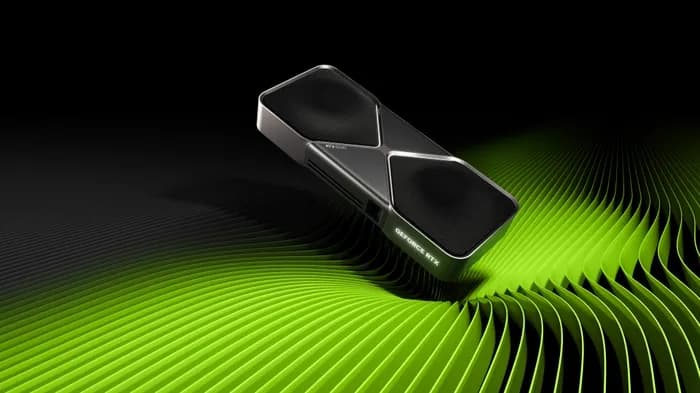
Prefer specs side-by-side? See the full comparison table →
Quick Answer
For a new AI build in 2026, buy the RTX 5090; if you already own an RTX 4090, don't upgrade. The RTX 5090 (32GB GDDR7, 1,792 GB/s, ~$2,100) runs ~40–50% faster and unlocks 25–32GB models — Llama 70B at Q3, Flux at FP16 — that the 24GB RTX 4090 ($1,600–$1,999) can't load. But the 4090 handles 7B–13B inference and Stable Diffusion just as well, runs on an 850W PSU instead of the 5090's 1000W+, and saves you $400–$1,000 on total system cost.
The Matchup
The RTX 5090 is NVIDIA's first Blackwell consumer GPU. The RTX 4090 was the undisputed AI champion for over two years. Now that the 5090 is here, the question every AI builder is asking: is the upgrade worth $400–$600 more?
Let's break it down with real specs and practical analysis.
Specs Head-to-Head
| Spec | RTX 5090 | RTX 4090 | Advantage |
|---|---|---|---|
| Architecture | Blackwell (GB202) | Ada Lovelace (AD102) | 5090 |
| VRAM | 32GB GDDR7 | 24GB GDDR6X | 5090 (+33%) |
| Memory Bandwidth | 1,792 GB/s | 1,008 GB/s | 5090 (+78%) |
| CUDA Cores | 21,760 | 16,384 | 5090 (+33%) |
| Tensor Cores | 5th Gen | 4th Gen | 5090 |
| TDP | 575W | 450W | 4090 (lower power) |
| Interface | PCIe 5.0 x16 | PCIe 4.0 x16 | 5090 |
| Price (new) | $1,999 – $2,199 | $1,599 – $1,999 | 4090 (cheaper) |
The VRAM Gap: 32GB vs 24GB
This is the biggest practical difference. Here's what each GPU can handle:
| Model | Quantization | VRAM Needed | RTX 4090 (24GB) | RTX 5090 (32GB) |
|---|---|---|---|---|
| Llama 3.1 8B | Q4_K_M | ~5GB | Yes | Yes |
| Llama 3.1 70B | Q4_K_M | ~40GB | No | No |
| Llama 3.1 70B | Q3_K_S | ~30GB | No | Yes |
| Mistral 22B | Q4_K_M | ~14GB | Yes | Yes |
| Qwen 32B | Q4_K_M | ~20GB | Tight | Yes |
| SDXL (image gen) | FP16 | ~8GB | Yes | Yes |
| Flux (image gen) | FP16 | ~24GB | Tight | Yes |
Key takeaway: The 5090's 32GB unlocks models in the 25–32GB VRAM range that the 4090 can't touch. This includes 70B models at aggressive quantization levels and the latest high-resolution image generators at full precision.
Note
For the majority of AI tasks (7B–13B inference, Stable Diffusion, fine-tuning small models), both GPUs perform excellently. The 5090's advantage shows primarily with 20B+ parameter models.
Real-World AI Performance
In practical AI workloads, the RTX 5090 delivers approximately:
- 40–50% faster inference on models that fit in both GPUs' VRAM (thanks to higher bandwidth and newer tensor cores)
- 30–40% faster image generation with Stable Diffusion and Flux
- Access to larger models that the 4090 physically cannot run due to VRAM limits
The bandwidth improvement (1,792 vs 1,008 GB/s) is especially impactful for LLM inference, where token generation speed is directly bottlenecked by memory bandwidth. Early benchmarks from Tom's Hardware and Hardware Corner corroborate these figures, with both publications measuring 40–55% inference gains in llama.cpp workloads across 8B–32B models.
Power and Cooling
The 5090's 575W TDP is no joke. Practical implications:
- You need a 1000W+ PSU (the 4090 works fine with 850W)
- GPU temperatures run hotter — good case airflow is mandatory
- Electricity cost is ~25% higher under load
- Some smaller cases simply won't fit or cool a 575W card properly
Warning
If your current system has an 850W PSU, upgrading to the RTX 5090 means a PSU replacement too. Factor in $150–$200 for a quality 1000W+ unit.
Price-to-Performance
| Metric | RTX 5090 | RTX 4090 |
|---|---|---|
| Price (new) | ~$2,100 | ~$1,700 |
| Price per GB VRAM | $65.60/GB | $70.80/GB |
| Performance uplift | Baseline | ~30-40% slower |
| $/performance | Better | Close |
| Total system cost (new build) | ~$4,500 | ~$3,500 |
Dollar-for-dollar, the RTX 5090 actually offers better value per GB of VRAM. But the total system cost is ~$1,000 higher when you include the beefier PSU and potentially better cooling.
The Verdict
Buy the RTX 5090 if:
- You're building a new system from scratch
- You want to run 20B+ parameter models without aggressive quantization
- You want maximum inference speed for production workloads
- You have a 1000W+ PSU or are willing to upgrade
Keep or buy the RTX 4090 if:
- You already own a 4090 — the upgrade isn't transformative enough to justify $2,000+
- You primarily run 7B–13B models (24GB is plenty)
- You want to save $400–$1,000 on total system cost
- Power consumption matters to you (850W PSU is fine)
Related GPU Comparisons
- RTX 3090 vs RTX 4090 for AI — the budget question: is the previous-gen 3090 good enough at half the price?
- RTX 5080 vs RTX 4090 for AI — the mid-range Blackwell option: better compute, less VRAM.
- Best GPU for AI 2026 — our complete GPU buyer's guide covering every tier.
Compare Side by Side
See our detailed comparison: RTX 5090 vs RTX 4090 →
Our recommendation: For new builds in 2026, the RTX 5090 is the better buy — the 32GB VRAM and bandwidth improvements are worth the premium. If you already have a 4090, don't upgrade; wait for the 5090 Ti or next generation.
Frequently Asked Questions
Is the RTX 5090 worth it over the RTX 4090 for AI?
For a new build, yes — the RTX 5090's 32GB of VRAM and 1,792 GB/s of bandwidth (vs 24GB and 1,008 GB/s on the 4090) deliver roughly 40–50% faster inference and unlock models the 4090 can't load. If you already own a 4090, no: the upgrade isn't transformative enough to justify $2,000+ when you primarily run 7B–13B models, which 24GB handles comfortably.
What can the RTX 5090 run that the RTX 4090 can't?
The 5090's 32GB unlocks the 25–32GB VRAM range the 24GB 4090 can't touch: Llama 3.1 70B at Q3 quantization (~30GB), Qwen 32B at Q4, and Flux image generation at full FP16 precision. For 7B–13B inference and standard Stable Diffusion, both cards perform excellently.
How much faster is the RTX 5090 than the RTX 4090 for AI?
About 40–50% faster on LLM inference for models that fit in both cards' VRAM, and 30–40% faster on Stable Diffusion and Flux image generation. The gain comes mostly from the jump in memory bandwidth (1,792 vs 1,008 GB/s) — LLM token generation is bottlenecked by bandwidth. Tom's Hardware and Hardware Corner measured 40–55% inference gains in llama.cpp across 8B–32B models.
Do you need a new power supply for the RTX 5090?
Likely yes. The RTX 5090's 575W TDP calls for a 1000W+ PSU, whereas the 450W RTX 4090 runs fine on 850W. If your current system has an 850W supply, budget $150–$200 for a quality 1000W+ unit on top of the card itself — and make sure your case has the airflow to cool a 575W GPU.
How much do the RTX 5090 and RTX 4090 cost in 2026?
New RTX 5090 cards run about $1,999–$2,199 (~$2,100 street), and RTX 4090 cards about $1,599–$1,999 (~$1,700 street). The 5090 is actually cheaper per GB of VRAM ($65.60/GB vs $70.80/GB), but total new-build system cost lands ~$1,000 higher once you factor in the beefier PSU and cooling.