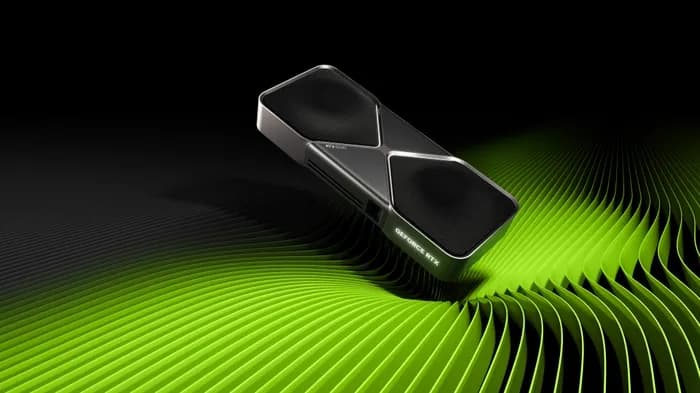
NVIDIA GeForce RTX 5090
$1,999 – $2,199
The most powerful consumer GPU for AI in 2026. 32GB GDDR7 with Blackwell architecture and 5th-gen tensor cores — runs 70B+ parameter models locally with unprecedented speed.
Affiliate links — We earn a commission on qualifying purchases at no cost to you.
Specifications
| VRAM | 32GB GDDR7 |
| CUDA Cores | 21,760 |
| Memory Bandwidth | 1,792 GB/s |
| TDP | 575W |
| Interface | PCIe 5.0 x16 |
Pros
- 32GB VRAM handles the largest consumer AI workloads
- Blackwell architecture with 5th-gen tensor cores
- PCIe 5.0 for maximum data throughput
Cons
- Very high power consumption (575W)
- Requires 1000W+ PSU and robust cooling
- Premium launch pricing
Related Articles
Best GPU for AI in 2026: Complete Buyer's Guide (Tested & Ranked)
We benchmarked every major GPU for AI inference, training, and image generation. RTX 5090, RTX 4090, RTX 3090, A100, H100, and MI300X — ranked with real-world tokens/sec data, VRAM analysis, and price/performance ratios for every budget.
AMD vs NVIDIA for AI: Which GPU Should You Buy in 2026?
A deep-dive comparison of AMD and NVIDIA GPUs for AI workloads in 2026 — ROCm vs CUDA software ecosystems, datacenter and consumer hardware head-to-head, price/performance analysis, and clear recommendations for every budget.
How Much VRAM Do You Need for AI in 2026?
A practical guide to GPU memory requirements for every AI workload — LLM inference, training, image generation, and video. Includes a complete VRAM lookup table by model and quantization level, plus hardware recommendations.
Best GPU for AI Image Generation in 2026: Stable Diffusion, Flux & Beyond
Tested and ranked: the best GPUs for running Stable Diffusion XL, Flux, and other AI image generators locally. VRAM requirements, generation speed benchmarks, and budget-tier picks from $300 to $2,000+.
Related Products
Disclosure: Some links on this page are affiliate links. We may earn a commission if you make a purchase — at no extra cost to you. This helps support our independent reviews.