Topic Hub
AI GPU Buying Guide
The GPU is the single most important component for AI workloads, and the market moves fast. New architectures, shifting prices, and evolving model requirements mean last year's advice is already outdated. This hub brings together our GPU comparisons, VRAM deep-dives, and benchmark roundups so you can make a confident buying decision — whether you're running inference on a budget, training models, or building a multi-GPU rig for production workloads.
Top Picks
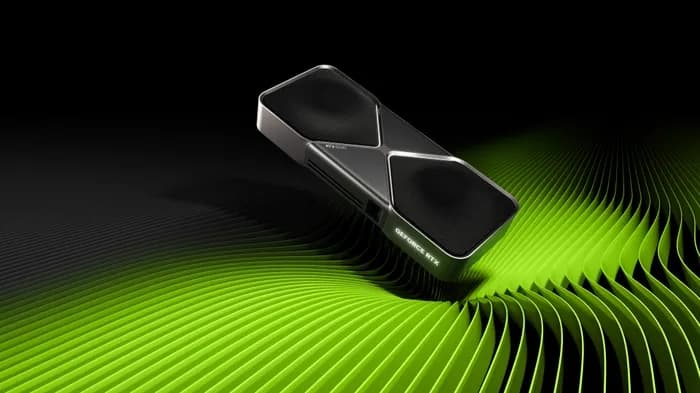
NVIDIA GeForce RTX 5090
$1,999 – $2,199
- VRAM: 32GB GDDR7
- CUDA Cores: 21,760
- Memory Bandwidth: 1,792 GB/s
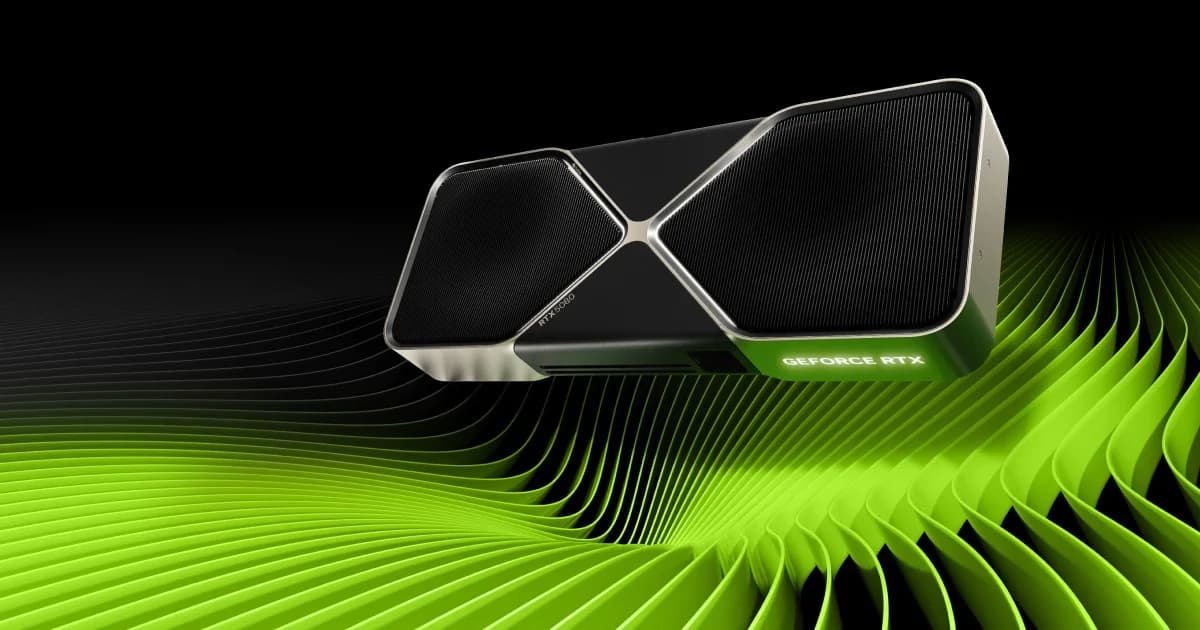
NVIDIA GeForce RTX 5080
$999 – $1,099
- VRAM: 16GB GDDR7
- CUDA Cores: 10,752
- Memory Bandwidth: 960 GB/s
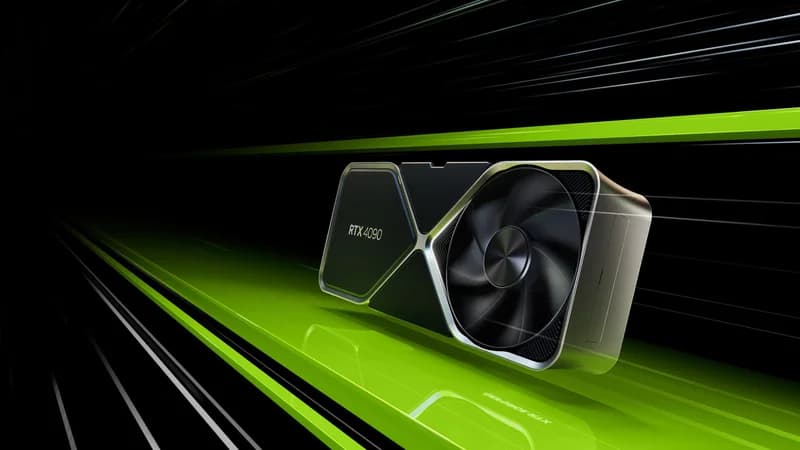
NVIDIA GeForce RTX 4090
$1,599 – $1,999
- VRAM: 24GB GDDR6X
- CUDA Cores: 16,384
- Memory Bandwidth: 1,008 GB/s
Related Articles
Best AI Mini PC Under $500 in 2026: What 16–32GB of RAM Actually Runs Locally
Three sub-$500 mini PCs, honest tokens-per-second expectations, and the two specs that decide performance at this tier — memory capacity and memory channels, not NPU TOPS. Plus why the 2026 memory shortage makes a prebuilt cheaper than its own parts.
ReadGuideQwen3.8-27B Hardware Requirements 2026: Real VRAM Numbers for 24GB, 32GB, and 128GB
Every other Qwen3.8-27B hardware guide answers one question — how much VRAM do the weights need? — and stops at 16.8GB. That is the wrong number. The KV cache at this model's 262K native context is bigger than the weights, and it is the number that decides whether you buy a 24GB card, a 32GB card, or a 128GB unified-memory box.
ReadGuideRun 100B+ MoE Models on a 16GB GPU: The 2026 CPU-Offload Hardware Guide
Mixture-of-Experts models broke the "just buy more VRAM" rule. Here's which GPU and how much RAM to actually buy to exploit --n-cpu-moe — and the DDR5 price point where the strategy stops winning.
ReadGuideThinking Machines Inkling Local Hardware Guide (2026) — What It Takes to Run the 975B / 276B Open-Weight MoE
Thinking Machines Lab shipped Inkling on July 15, 2026 — its first open model, Apache 2.0, with weights on Hugging Face at launch. It comes in two sizes: the 975B-A41B flagship (datacenter/multi-GPU only) and Inkling-Small 276B-A12B, which fits a single Ultra-class Mac Studio at Q4. Here's the honest memory-math answer for every budget.
ReadGuideCohere North Mini Code 1.0 — Local Hardware Guide (2026): What GPU or Mac You Actually Need
Cohere's North Mini Code 1.0 is a 30B-total / 3B-active MoE, so its w4a16 quant needs only ~18–20GB of memory — it runs on a single used RTX 3090, an RTX 4090, or a 32GB Apple Silicon Mac, while its 3B active parameters keep decode fast even on that modest hardware. Here's the exact card-by-card buying answer, with prices and a VRAM-to-tok/s table.
ReadGuideHow to Run Kimi K2.6 Locally (2026): The Real Hardware It Takes — and the Cheapest Rig That Actually Works
Kimi K2.6 (Moonshot AI, April 2026) is the leading open-weight coding model — a 1.04T-parameter MoE with 32B active. Here's the honest answer: you basically can't run it on one card. Full per-quant memory table (Q2→FP16), the cheapest rig that fits (4× RTX 3090 + 256GB RAM ≈ 350GB), the 8×H200 money-no-object path, and a clean offramp to smaller models if your box can't reach 350GB.
ReadGuideBest GPU for a Local Coding Assistant in 2026: VRAM Tiers to Replace Copilot with Qwen3-Coder, GLM-5.2 & Kimi K2.7 Code
Local coding models finally got good enough to cancel a Copilot subscription — but only if you buy the right card. This is a buyer's guide organized by VRAM tier, not by model: spend $X, run coding-model tier Y. The short answer: a $429 RTX 5060 Ti runs Qwen3-Coder for tab-complete plus a 30B-A3B model for agentic chat, and pays for itself versus a $20/month subscription in under two years.
ReadGuideGLM-5.2 Local Hardware Guide (2026) — What It Actually Takes to Run the Best Open Coding Model at Home
Z.ai's GLM-5.2 is a 743B-parameter MoE (≈39B active) that tops the open-source coding leaderboards — and it's free to download. Here's the honest hardware answer: the 2-bit GGUF needs ~239GB of memory, which means a 256GB-class Mac Studio, a 4× RTX 3090 rig with 192GB RAM, or an 8×H200 server for FP8 — plus the off-ramp for everyone who can't hit 240GB.
ReadGuideNVIDIA Nemotron 3 Nano Omni — Local Hardware Guide (2026)
NVIDIA's first frontier-class multimodal open model runs on a single 16GB GPU. Here's the complete hardware buyer's guide: VRAM math, GPU picks, Apple Silicon options, tok/s estimates, and a decision tree for Nemotron 3 Nano Omni in 2026.
Read