Topic Hub
Mini PC for AI
You don't need a full tower to run AI locally. Modern mini PCs pack enough unified memory, neural engines, and efficient compute to handle 7B-30B parameter models in a form factor that fits on your desk. Apple Silicon leads with massive unified memory bandwidth, but x86 alternatives from Beelink and Intel offer discrete GPU flexibility at lower price points. This hub covers every mini PC option for AI — from the Mac Mini M4 Pro to budget Beelink rigs — with real performance data and setup guides.
Shopping the 128GB unified-memory tier specifically — Strix Halo boxes, Ryzen AI Max mini PCs, and their measured tok/s? Our sister site goes deeper on that exact niche: DataHardware.
Top Picks
Apple Mac Mini M4 Pro
$1,599 — discontinued
- Chip: Apple M4 Pro
- CPU Cores: 12-core
- GPU Cores: 18-core
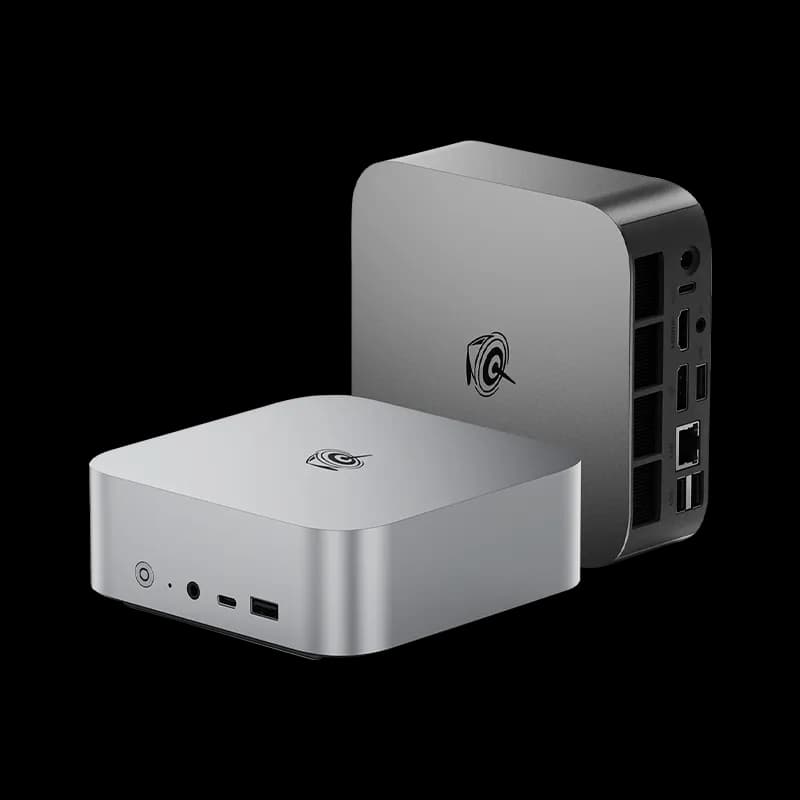
Beelink SER8 Mini PC
$449 – $599
- CPU: AMD Ryzen 7 8845HS
- GPU: Radeon 780M (RDNA 3)
- RAM: 32GB DDR5-5600
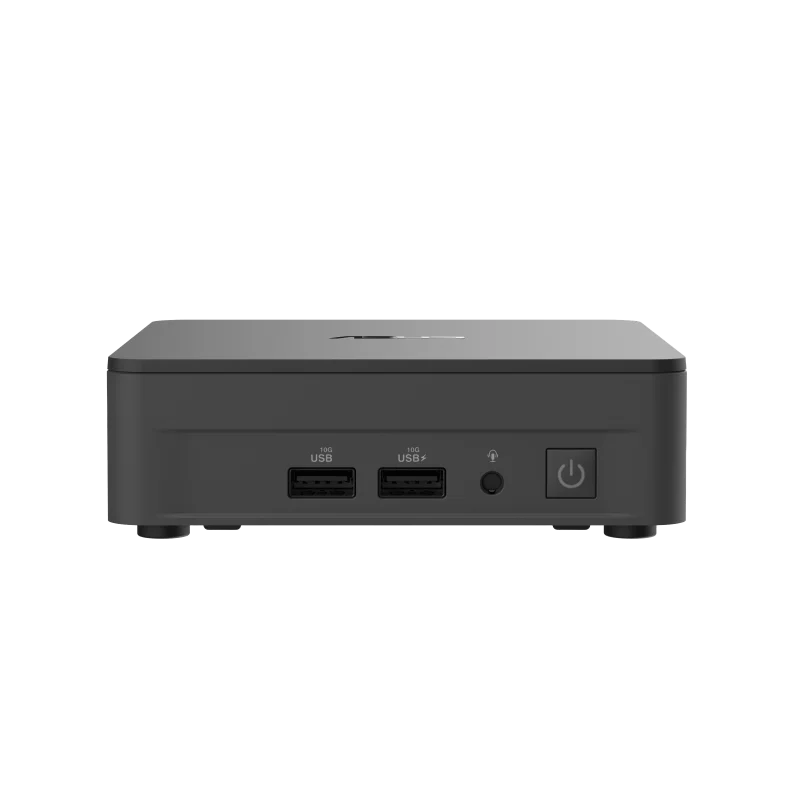
ASUS NUC 13 Pro (formerly Intel NUC)
$600 – $900
- CPU: Intel Core i7-1360P
- RAM: Up to 64GB DDR4
- Storage: M.2 NVMe + 2.5" SATA
Related Articles
Best AI Mini PC Under $500 in 2026: What 16–32GB of RAM Actually Runs Locally
Three sub-$500 mini PCs, honest tokens-per-second expectations, and the two specs that decide performance at this tier — memory capacity and memory channels, not NPU TOPS. Plus why the 2026 memory shortage makes a prebuilt cheaper than its own parts.
ReadGuideSplash Engine Mac Requirements 2026: The 36GB Floor That Rules Out the $899 M6 Mac mini
Splash Engine requires at least 36GB of unified memory, which means the $899 M6 Mac mini — capped at 32GB — can never run it, and the $1,699 M5 Pro Mac mini needs a $600 upgrade to its 48GB tier, landing at $2,299. Here is the eligibility matrix for every shipping Mac, the measured speed you actually get, and the two-model catch nobody leads with.
ReadGuideAMD Gorgon Halo 192GB for Local AI (2026): +50% Memory, +6.6% Bandwidth — What the Extra 64GB Actually Buys
The Ryzen AI Max+ PRO 495 raises unified memory 50% to 192GB but bandwidth only 6.6%, to 273 GB/s, with the same 40 RDNA 3.5 compute units. Here's the arithmetic that decides whether you wait for 192GB or buy a 128GB Strix Halo box today.
ReadGuideBest Mini PC for AI in 2026: Every Tier From $229 to $4,000, Ranked by What It Can Actually Run
A tier-by-tier guide to the best mini PC for AI in 2026 — organised by memory capacity, not by spec sheet. Includes the just-announced M6 and M5 Pro Mac mini, the 128GB Strix Halo tier, the NPU myth, and when a desktop GPU beats every mini PC on this list.
ReadComparisonStrix Halo vs Mac Studio M4 Max for Local AI: Which Unified-Memory Box in 2026?
The GMKtec EVO-X2 (Ryzen AI Max+ 395 "Strix Halo") and the Mac Studio M4 Max both run big models on shared unified memory with no discrete GPU. Both now cap at 128GB, so the decision is no longer about capacity — it is about the software stack, memory bandwidth, and price.
ReadGuideBest GPU for a Local Coding Assistant in 2026: VRAM Tiers to Replace Copilot with Qwen3-Coder, GLM-5.2 & Kimi K2.7 Code
Local coding models finally got good enough to cancel a Copilot subscription — but only if you buy the right card. This is a buyer's guide organized by VRAM tier, not by model: spend $X, run coding-model tier Y. The short answer: a $429 RTX 5060 Ti runs Qwen3-Coder for tab-complete plus a 30B-A3B model for agentic chat, and pays for itself versus a $20/month subscription in under two years.
ReadGuideNVIDIA Nemotron 3 Nano Omni — Local Hardware Guide (2026)
NVIDIA's first frontier-class multimodal open model runs on a single 16GB GPU. Here's the complete hardware buyer's guide: VRAM math, GPU picks, Apple Silicon options, tok/s estimates, and a decision tree for Nemotron 3 Nano Omni in 2026.
ReadComparisonMLX vs llama.cpp on Apple Silicon: Which Is Faster for Local AI in 2026?
Apple's MLX framework is consistently 30–50% faster than llama.cpp for LLM inference on Apple Silicon — and published academic benchmarks show it sustaining ~230 tokens/sec on optimized 7B models. Here's the head-to-head: when MLX wins, when llama.cpp still wins, and how to set both up on a Mac Mini M4 Pro or Mac Studio M4 Max.
ReadGuideMac Mini Cluster for Local AI 2026 — Run 70B+ Models with EXO and Thunderbolt 5 RDMA
macOS 26.2 added kernel-level RDMA over Thunderbolt 5 and EXO 1.0 shipped day-0 support — turning a stack of M4 Pro Mac Minis into the cheapest practical way to run DeepSeek V3 671B and Llama 4 Maverick at home. Per-tier shopping list, real benchmarks, and a clear decision rule.
Read