Topic Hub
Complete Guide to Running LLMs Locally
Running LLMs locally gives you privacy, zero API costs, and full control over your AI stack. But choosing the right hardware matters: too little VRAM and your model won't load, too slow a GPU and inference crawls. This hub collects every guide, tutorial, and comparison you need to go from zero to running 70B+ parameter models on your own machine — covering GPU selection, quantization trade-offs, software setup with Ollama and llama.cpp, and real-world benchmark data from our testing.
Top Picks
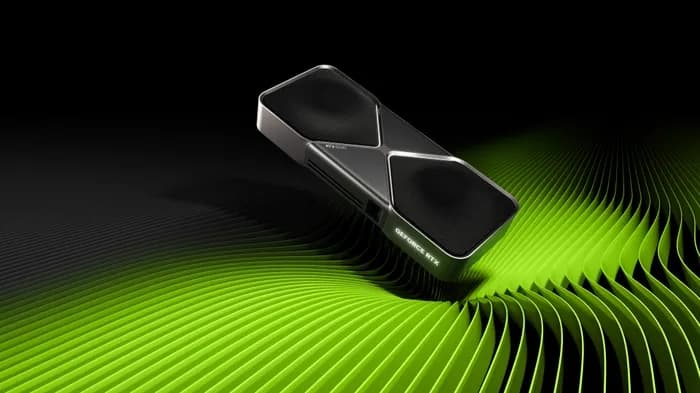
NVIDIA GeForce RTX 5090
$1,999 – $2,199
- VRAM: 32GB GDDR7
- CUDA Cores: 21,760
- Memory Bandwidth: 1,792 GB/s
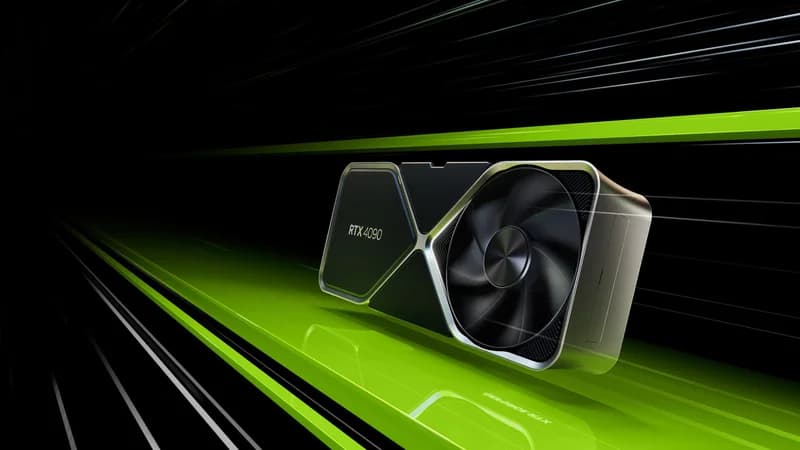
NVIDIA GeForce RTX 4090
$1,599 – $1,999
- VRAM: 24GB GDDR6X
- CUDA Cores: 16,384
- Memory Bandwidth: 1,008 GB/s
Apple Mac Mini M4 Pro
$1,599 — discontinued
- Chip: Apple M4 Pro
- CPU Cores: 12-core
- GPU Cores: 18-core
Related Articles
Strata Hardware Requirements: Run 125B Qwen3.8-Flash-Next on a 12GB GPU (2026)
Strata runs the 125B-parameter Qwen3.8-Flash-Next on a 12GB NVIDIA or AMD GPU, but the real requirement is RAM: 32GB is the floor and 64GB unlocks every model size. Intel Arc and Mac aren't supported at all. Here's the pass/fail checklist, what the benchmark numbers actually mean, and the cheapest upgrade for each starting point.
ReadGuideBest AI Mini PC Under $500 in 2026: What 16–32GB of RAM Actually Runs Locally
Three sub-$500 mini PCs, honest tokens-per-second expectations, and the two specs that decide performance at this tier — memory capacity and memory channels, not NPU TOPS. Plus why the 2026 memory shortage makes a prebuilt cheaper than its own parts.
ReadGuideSplash Engine Mac Requirements 2026: The 36GB Floor That Rules Out the $899 M6 Mac mini
Splash Engine requires at least 36GB of unified memory, which means the $899 M6 Mac mini — capped at 32GB — can never run it, and the $1,699 M5 Pro Mac mini needs a $600 upgrade to its 48GB tier, landing at $2,299. Here is the eligibility matrix for every shipping Mac, the measured speed you actually get, and the two-model catch nobody leads with.
ReadGuideBest Motherboard for a Dual-GPU Local LLM Build (2026): PCIe Lanes, x8/x8 vs x16/x4, and What Actually Costs You Tokens/sec
Every board roundup hands you a spec table and implies you need maximum PCIe lanes. For llama.cpp layer-split inference you almost certainly don't. Here is the lane math for AM5 vs Threadripper, why x8/x8 is fine until it isn't, the slot-spacing rule for 3-slot GPUs, and three complete builds.
ReadGuideQwen3.8-27B Hardware Requirements 2026: Real VRAM Numbers for 24GB, 32GB, and 128GB
Every other Qwen3.8-27B hardware guide answers one question — how much VRAM do the weights need? — and stops at 16.8GB. That is the wrong number. The KV cache at this model's 262K native context is bigger than the weights, and it is the number that decides whether you buy a 24GB card, a 32GB card, or a 128GB unified-memory box.
ReadGuideBest CPU for Local LLM Inference in 2026: Why Memory Bandwidth Beats Core Count
Every CPU roundup ranks chips by cores and clocks. For local LLM token generation those are close to irrelevant — memory bandwidth sets the ceiling. Here's the equation, the platform bandwidth table, and which CPU to actually buy.
ReadGuideBest Mini PC for AI in 2026: Every Tier From $229 to $4,000, Ranked by What It Can Actually Run
A tier-by-tier guide to the best mini PC for AI in 2026 — organised by memory capacity, not by spec sheet. Includes the just-announced M6 and M5 Pro Mac mini, the 128GB Strix Halo tier, the NPU myth, and when a desktop GPU beats every mini PC on this list.
ReadGuideRun 100B+ MoE Models on a 16GB GPU: The 2026 CPU-Offload Hardware Guide
Mixture-of-Experts models broke the "just buy more VRAM" rule. Here's which GPU and how much RAM to actually buy to exploit --n-cpu-moe — and the DDR5 price point where the strategy stops winning.
ReadGuideThinking Machines Inkling Local Hardware Guide (2026) — What It Takes to Run the 975B / 276B Open-Weight MoE
Thinking Machines Lab shipped Inkling on July 15, 2026 — its first open model, Apache 2.0, with weights on Hugging Face at launch. It comes in two sizes: the 975B-A41B flagship (datacenter/multi-GPU only) and Inkling-Small 276B-A12B, which fits a single Ultra-class Mac Studio at Q4. Here's the honest memory-math answer for every budget.
Read