RTX 3090 vs RTX 4090 for AI: Which Should You Buy in 2026?
Head-to-head comparison of the NVIDIA RTX 3090 and RTX 4090 for AI workloads. Benchmarks, VRAM analysis, price/performance, and a clear recommendation for LLM inference, Stable Diffusion, and fine-tuning.
Compute Market Team
Our Top Pick
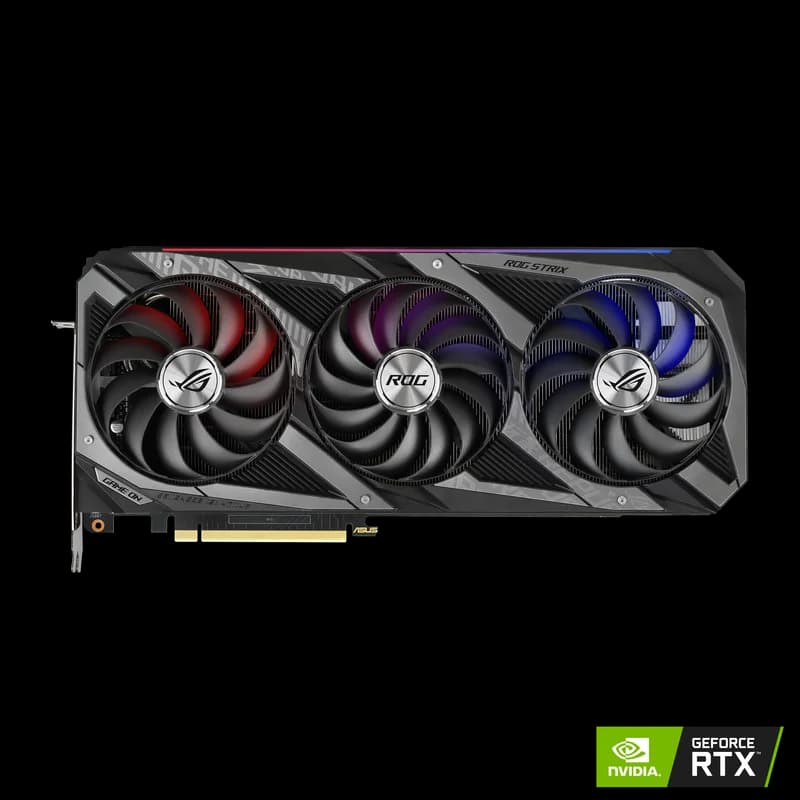
Prefer specs side-by-side? See the full comparison table →
Last updated: March 3, 2026. Benchmarks sourced from Hardware Corner, RunPod, Puget Systems, and Tom's Hardware. Prices reflect current street and secondary market pricing.
The Most Common GPU Dilemma in AI
If you are building an AI PC in 2026, you have almost certainly landed on the same question every builder asks: should I save money with a used RTX 3090 at $800–$950, or spend more for a used RTX 4090 at ~$2,200?
Both cards have 24GB VRAM. Both run CUDA. Both handle the same models. The difference is speed, power efficiency, and price — and the right choice depends entirely on your workload, budget, and tolerance for "good enough."
We have tested both cards extensively across LLM inference, image generation, video generation, and fine-tuning workloads. Here is the full comparison.
Specs at a Glance
| Spec | RTX 3090 | RTX 4090 | Difference |
|---|---|---|---|
| Architecture | Ampere (GA102) | Ada Lovelace (AD102) | 2 generations newer |
| VRAM | 24GB GDDR6X | 24GB GDDR6X | Same |
| Memory Bandwidth | 936 GB/s | 1,008 GB/s | 4090 is 8% faster |
| CUDA Cores | 10,496 | 16,384 | 4090 has 56% more |
| Tensor Cores | 328 (3rd Gen) | 512 (4th Gen) | 4090 has 56% more + newer gen |
| FP16 TFLOPS | 71 TFLOPS | 165 TFLOPS | 4090 has 132% more compute |
| TDP | 350W | 450W | 4090 draws 29% more power |
| Memory Bus | 384-bit | 384-bit | Same |
| PCIe | 4.0 x16 | 4.0 x16 | Same |
| Street Price (Mar 2026) | $800–$950 (used) | ~$2,200 (used) | 4090 costs 2.5x more |
The spec sheet tells an interesting story: the RTX 4090 has massively more compute (56% more CUDA cores, 132% more FP16 TFLOPS), but only 8% more memory bandwidth. For AI workloads that are memory-bandwidth-bound — which LLM inference absolutely is — the performance gap is much smaller than the specs suggest.
LLM Inference Benchmarks
This is the benchmark that matters most for the majority of AI builders. LLM inference speed is almost entirely determined by memory bandwidth, because each new token requires reading through the model's weights.
| Model | RTX 3090 | RTX 4090 | 4090 Advantage |
|---|---|---|---|
| Llama 3.1 8B (Q4_K_M) — tokens/sec | ~112 t/s | ~128 t/s | +14% |
| Qwen 2.5 14B (Q4_K_M) — tokens/sec | ~55 t/s | ~68 t/s | +24% |
| Qwen 2.5 32B (Q4_K_M) — tokens/sec | ~28 t/s | ~35 t/s | +25% |
| Llama 3.1 8B — prompt processing (tokens/sec) | ~2,800 t/s | ~4,300 t/s | +54% |
Token generation benchmarks from Hardware Corner and RunPod. Prompt processing measured on 1,024-token inputs.
The key insight: token generation (the speed you feel during conversation) is only 14–25% faster on the RTX 4090. That is noticeable but not transformative. Both cards produce tokens faster than you can read them for models up to 14B.
Prompt processing (the initial "thinking" time when you send a long message) is where the 4090 pulls ahead significantly — 54% faster on 8B models. If you are processing long documents or running batch inference, this matters. For interactive chat, it is less important.
Why Isn't the 4090 Twice as Fast?
Despite having 56% more CUDA cores and 132% more FP16 compute, the RTX 4090 is only 14–25% faster at token generation. This is because LLM inference is memory-bandwidth-bound, not compute-bound. The 4090 has only 8% more memory bandwidth (1,008 GB/s vs 936 GB/s). Both cards are reading model weights from VRAM at roughly the same speed — the 4090's extra compute power sits mostly idle during token generation.
Image Generation Benchmarks
Image generation is more compute-heavy than LLM inference, and this is where the RTX 4090's architectural advantages shine.
| Workload | RTX 3090 | RTX 4090 | 4090 Advantage |
|---|---|---|---|
| SDXL 1024x1024 (30 steps) | ~12 sec/image | ~6.5 sec/image | +85% faster |
| SD 3.5 Large 1024x1024 | ~35 sec/image | ~22 sec/image | +59% faster |
| Flux Dev 1024x1024 | ~25 sec/image | ~15 sec/image | +67% faster |
For image generation, the RTX 4090 is 59–85% faster — a meaningful, day-to-day-noticeable improvement. If you are generating hundreds of images for production work, iterating on prompts rapidly, or running ComfyUI workflows with multiple passes, the 4090 saves substantial time.
For a complete breakdown of GPUs for image work, see our image generation GPU guide.
Video Generation
AI video generation models (Wan2.1, CogVideoX, HunyuanVideo) are both compute-intensive and VRAM-hungry. Both cards share the same 24GB VRAM ceiling, which limits video length and resolution equally. The 4090's compute advantage translates to 40–60% faster render times.
For serious video generation work, neither the 3090 nor the 4090 is ideal — both are limited by 24GB VRAM. The RTX 5090 with 32GB is the better choice for this use case. See our video generation GPU guide.
Fine-Tuning Performance
Fine-tuning with QLoRA (quantized LoRA adapters) is feasible on both cards. The RTX 4090 completes fine-tuning runs approximately 30–50% faster due to its stronger compute and 4th-gen tensor cores with better FP8 support.
| Fine-Tuning Task | RTX 3090 | RTX 4090 |
|---|---|---|
| QLoRA 7B model (1 epoch, 10K samples) | ~45 minutes | ~30 minutes |
| QLoRA 13B model (1 epoch, 10K samples) | ~90 minutes | ~60 minutes |
| Maximum model size for QLoRA | ~13B (comfortable) | ~13B (comfortable) |
Both cards support the same model sizes for fine-tuning since VRAM is identical. The difference is purely speed.
The Price/Performance Verdict
This is where the RTX 3090 dominates:
| Metric | RTX 3090 | RTX 4090 |
|---|---|---|
| Street Price | $850 avg (used) | $2,200 avg (used) |
| 8B Tokens/sec | ~112 t/s | ~128 t/s |
| Tokens/sec per $1,000 | 131.8 t/s | 58.2 t/s |
| VRAM per $1,000 | 28.2 GB | 10.9 GB |
| SDXL images/sec per $1,000 | 0.098 | 0.070 |
The RTX 3090 delivers 2.26x more tokens per dollar than the RTX 4090. For LLM inference, it is the clear value champion. The RTX 4090 only wins on absolute speed — you pay 2.5x more for 14–25% more token generation performance.
For image generation, the math shifts somewhat: the 4090 is 59–85% faster, which narrows the price/performance gap. But the 3090 still delivers better value per dollar even in this compute-heavy workload.
Power and Efficiency
| Metric | RTX 3090 | RTX 4090 |
|---|---|---|
| TDP | 350W | 450W |
| Typical AI Workload Draw | ~300W | ~350W |
| PSU Requirement | 850W minimum | 850W minimum (1000W recommended) |
| Monthly Electricity (8 hrs/day, $0.15/kWh) | ~$11/month | ~$13/month |
| Tokens/sec per Watt (8B model) | 0.37 t/s/W | 0.37 t/s/W |
Interestingly, both cards deliver roughly the same tokens per watt for LLM inference. The 4090 is faster but draws proportionally more power. For image generation, the 4090 is more power-efficient thanks to the Ada Lovelace architecture improvements.
The electricity cost difference is negligible — about $2/month at typical US power rates. Do not factor power costs into your GPU decision at this level.
Software Compatibility
Both cards use CUDA and run identically with every major AI framework. There are no software compatibility differences between the RTX 3090 and RTX 4090 for AI workloads. Any model, any framework, any tutorial that works on one will work on the other.
One minor note: the RTX 4090's 4th-gen tensor cores support FP8 precision natively, which some newer inference engines (TensorRT-LLM) can leverage for additional speed. The RTX 3090's 3rd-gen tensor cores do not support FP8. In practice, this matters for production deployment more than personal use.
Wild Card: Two RTX 3090s vs One RTX 4090
A dual RTX 3090 setup costs roughly $1,700 (two used cards) and provides 48GB total VRAM — enough to run 70B models at Q4 quantization without CPU offloading. One RTX 4090 costs $2,200 and is limited to 24GB.
| Config | Total VRAM | Cost | Max Model (Q4) | Complexity |
|---|---|---|---|---|
| 2x RTX 3090 | 48GB | ~$1,700 | 70B comfortably | High (dual-GPU setup, higher PSU needs) |
| 1x RTX 4090 | 24GB | ~$2,200 | 30B comfortably | Low (single card) |
| 1x RTX 5090 | 32GB | ~$3,500 | ~45B comfortably | Low (single card) |
The dual 3090 setup is the cheapest way to run 70B models at decent speed. The trade-offs: you need a motherboard with two x16 PCIe slots, a 1200W+ PSU, excellent case airflow for 700W of GPU heat, and you accept the latency penalty of multi-GPU inference (data transfers between cards add overhead). llama.cpp and vLLM both support multi-GPU splitting natively.
Who Should Buy Which
Buy the RTX 3090 if:
- Budget is your primary constraint
- You primarily run LLMs (7B–30B models) for chat, coding, or research
- You value price/performance over absolute speed
- You are building your first AI PC and want maximum VRAM per dollar
- You are comfortable buying used hardware
- You plan to build a dual-GPU rig in the future for 70B models
Buy the RTX 4090 if:
- Image generation speed matters (59–85% faster than 3090)
- You run frequent fine-tuning jobs and time savings compound
- You want a newer card with better warranty coverage
- You process long documents or do batch inference (prompt processing is 54% faster)
- You prefer not buying used hardware
- You are building a professional workstation where time is money
Buy the RTX 5090 instead if:
- You need 32GB VRAM for 70B models on a single card
- You do serious AI video generation (VRAM-hungry workloads)
- You want the fastest possible single-GPU inference and can absorb the $3,500+ street price
- For a full comparison of the 4090 and 5090, see: RTX 5090 vs RTX 4090 for AI
The Verdict
For most AI builders, the RTX 3090 is the smarter buy. It delivers the same 24GB VRAM, runs the same models, and costs less than half as much. The 14–25% speed penalty in token generation is barely noticeable during interactive use. At 131.8 tokens per second per $1,000 spent, the RTX 3090 offers more than double the value of the RTX 4090.
The RTX 4090 earns its premium in two scenarios: image generation workflows where the 59–85% speed improvement saves meaningful time, and professional environments where inference speed directly affects productivity or revenue. If you are generating hundreds of images daily or serving AI to a team, the 4090's faster compute justifies the cost.
Neither card is wrong. Both have 24GB VRAM, both run every model up to 30B comfortably, and both will serve you well for years. The question is whether the speed improvement is worth 2.5x the money. For most people, it is not.
Compare Side by Side
See our detailed comparison: RTX 4090 vs RTX 3090 →
Related GPU Comparisons
- RTX 5090 vs RTX 4090 for AI — the next-gen Blackwell flagship: 32GB VRAM and 78% more bandwidth.
- RTX 5080 vs RTX 4090 for AI — Blackwell mid-range vs Ada flagship: compute vs VRAM trade-off.
- Best Budget GPU for AI — every GPU under $1,000 ranked for AI workloads.
- Best GPU for AI 2026 — our complete GPU buyer's guide covering every tier.
Frequently Asked Questions
Is the RTX 3090 or RTX 4090 better for AI?
Both GPUs have 24GB VRAM and run the same AI models. The RTX 4090 is 15–40% faster depending on the workload, but costs roughly 2.5x more ($2,200 vs $850 used). The RTX 3090 offers better price/performance, while the RTX 4090 offers better raw performance.
Can the RTX 3090 run 70B parameter models?
The RTX 3090 can run 70B models at Q3 quantization with partial CPU offloading, but this is slow. For comfortable 70B inference, you need 32GB+ VRAM (RTX 5090) or a dual-GPU setup. The RTX 3090 handles 30B models comfortably and 7B–13B models at full speed.
Should I buy two RTX 3090s or one RTX 4090?
Two used RTX 3090s (~$1,700) give you 48GB total VRAM and can run 70B models via multi-GPU inference in llama.cpp. One RTX 4090 (~$2,200) is simpler, faster per-card, and uses less power. If you need 70B models, dual 3090s are the budget play. If 30B models are your ceiling, a single 4090 is cleaner.