GPU Prices Are Spiking in 2026: What to Buy for Local AI Before They Climb Higher
GDDR7 shortages have pushed GPU street prices 50-100% above MSRP. We break down actual April 2026 pricing, the best GPU at every budget tier from $249 to $2,000+, and whether you should buy now or wait for NVIDIA's Rubin generation.
Compute Market Team
Our Top Pick
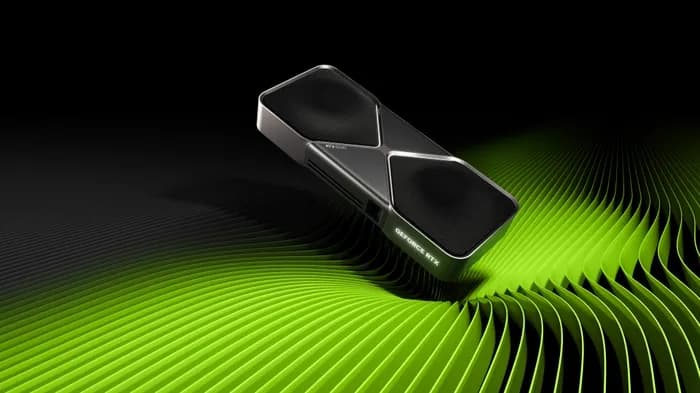
In March 2026, GDDR7 memory shortages have pushed GPU street prices 50–100% above MSRP — the RTX 5090 now trades at $3,500–$4,000+ versus its $1,999 list price, and even the discontinued RTX 4090 commands $2,500+ on the used market. If you're building or upgrading a local AI rig, the question isn't whether to buy — it's what to buy at today's inflated prices.
Most "best GPU for AI 2026" articles still list MSRP as though you can walk into a store and pay sticker price. You can't. This guide starts from actual street prices as of April 2026, factors in the DRAM shortage economics driving the spike, and gives you honest tier-by-tier recommendations based on what you'll really pay. We've pulled pricing data from Amazon, Newegg, and B&H Photo, cross-referenced with community reports from r/LocalLLaMA and verified benchmark data.
Why GPU Prices Are Rising in 2026
The GPU price spike isn't a simple supply-demand story — it's driven by a structural memory crisis that's reshaping the entire semiconductor market. Understanding it helps you time your purchase and pick the right card.
The GDDR7 and HBM Supply Crisis
According to TrendForce, the world's leading semiconductor market research firm, GDDR7 spot prices rose approximately 40% between Q4 2025 and Q1 2026. The root cause: hyperscaler AI datacenter buildouts from Microsoft, Google, Meta, and Amazon have consumed the vast majority of high-bandwidth memory (HBM3/HBM3e) production capacity. Memory fabs like Samsung, SK Hynix, and Micron have pivoted production lines toward the more profitable HBM chips, squeezing GDDR7 supply for consumer GPUs.
"GPU pricing is set for a reset," wrote analysts at the Astute Group in their Q1 2026 semiconductor outlook, noting that memory-driven cost increases would flow through to consumer graphics cards within 60–90 days of DRAM spot price spikes. That's exactly what happened.
NVIDIA and AMD's Phased Price Hikes
As first reported by WCCFTech, both NVIDIA and AMD implemented phased price increases starting in Q1 2026. Rather than a single dramatic hike, they've raised MSRPs and reduced channel subsidies incrementally — making each increase feel small while the cumulative effect is significant. NVIDIA's RTX 5090 Founders Edition MSRP remains officially $1,999, but authorized retailers have raised their own prices, and the GPU is effectively impossible to find below $3,500.
Tariffs and Supply Chain Disruption
New tariff policies on electronics imports have added 10–25% to landed costs for GPUs manufactured in Southeast Asia and China. Board partners like ASUS, MSI, and Gigabyte have passed these costs through to consumers. Combined with the memory shortage, this creates a compounding effect that's particularly brutal at the high end.
Current Street Prices vs MSRP (April 2026)
Here's the reality of what you'll actually pay for AI-capable GPUs in April 2026. These prices reflect current Amazon, Newegg, and B&H Photo listings — not manufacturer fantasy MSRPs.
| GPU | MSRP | Street Price (Mar 2026) | % Above MSRP | VRAM |
|---|---|---|---|---|
| RTX 5090 | $1,999 | $3,500 – $4,000+ | 75–100% | 32GB GDDR7 |
| RTX 4090 (used/NOS) | $1,599 | $2,500 – $2,800 | 56–75% | 24GB GDDR6X |
| RTX 4080 Super | $999 | $949 – $1,099 | 0–10% | 16GB GDDR6X |
| RTX 3090 (used) | $1,499 (original) | $699 – $999 | Below MSRP | 24GB GDDR6X |
| RTX 5060 Ti 16GB | $449 | $429 – $479 | 0–7% | 16GB GDDR7 |
| RTX 4060 Ti 16GB | $449 | $399 – $449 | Below/At MSRP | 16GB GDDR6 |
| Intel Arc B580 | $249 | $249 – $289 | 0–16% | 12GB GDDR6 |
The pattern is clear: the higher the GPU tier, the worse the markup. Flagship cards with GDDR7 (RTX 5090) are hit hardest by the memory shortage. Previous-gen cards using GDDR6/6X are relatively stable or even declining as owners upgrade. And budget cards like the Intel Arc B580 remain near MSRP because they use cheaper, more available GDDR6 memory.
This has a direct implication for local AI buyers: the best value isn't at the top of the stack anymore. Let's break down what to actually buy at each budget.
Best GPUs to Buy Right Now at Each Budget
Under $300: Intel Arc B580 — Best VRAM per Dollar on the Market
The Intel Arc B580 at $249 – $289 is the no-brainer entry point for local AI in 2026. With 12GB GDDR6 VRAM, it handles 7B parameter models comfortably — Llama 3 8B runs at approximately 28 tok/s (Q4 quantization), according to LM Studio Community benchmarks.
Best for: Running 7B models (Llama 3 8B, Mistral 7B, Qwen 2.5 7B), Stable Diffusion image generation, AI coding assistants, and getting started with local AI on a budget.
Limitations: 12GB VRAM caps you at 7B–13B models depending on quantization. Intel's OpenVINO ecosystem is less mature than NVIDIA's CUDA, meaning some tools require extra configuration. But for pure inference with Ollama and llama.cpp, it works well.
Why it's the best value right now: At $20.75 per GB of VRAM, the B580 offers the best VRAM-per-dollar ratio of any GPU on the market. It's also unaffected by the GDDR7 shortage since it uses GDDR6, so pricing has stayed stable while everything else climbs.
For a deeper look at how this card stacks up against the mid-range NVIDIA option, see our AMD vs NVIDIA mid-range comparison.
Under $500: RTX 5060 Ti 16GB — Blackwell Architecture at Mid-Range Pricing
The RTX 5060 Ti 16GB at $429 – $479 is the best new GPU for local AI under $500. It brings NVIDIA's latest Blackwell architecture with 5th-gen tensor cores and native FP4 support to the mid-range, delivering 42 tok/s on Llama 3 8B (Q4) at just 180W TDP.
Best for: Running 7B–13B models with maximum efficiency, Stable Diffusion XL at 6.2 it/s, AI coding copilots, and anyone who wants full CUDA compatibility with modern architecture. The 16GB VRAM handles most workflows that don't require 30B+ models.
Why buy the 5060 Ti over the 4060 Ti? The RTX 4060 Ti 16GB ($399 – $449) is slightly cheaper, but the 5060 Ti delivers 55% more memory bandwidth (448 vs 288 GB/s) and the efficiency gains from Blackwell tensor cores. For an extra $30–50, the generational leap is worth it.
For a detailed comparison of this card against used previous-gen options, read our Used RTX 3090 vs RTX 5060 Ti deep-dive.
Under $1,000: Used RTX 3090 — Unbeatable 24GB for 30B+ Models
The used RTX 3090 at $699 – $999 is the sweet spot of the 2026 GPU market. It's the only way to get 24GB VRAM without spending $1,500+, and that VRAM capacity is non-negotiable for running 30B+ parameter models at reasonable quantization levels.
Performance: The RTX 3090 delivers 48 tok/s on Llama 3 8B (Q4) and approximately 9 tok/s on Llama 3 70B (Q4), according to LM Studio Community benchmarks. For 30B models, expect 14–16 tok/s — perfectly usable for interactive sessions.
Best for: Running 30B–70B parameter models (Llama 3 70B, DeepSeek-R1 32B, CodeLlama 34B), image generation with large models, and anyone who needs maximum VRAM at minimum cost.
Risks: No warranty on used cards. Potential mining wear (though GPU mining ended in 2022 with Ethereum's proof-of-stake transition, so most used 3090s have had several years of lighter use since). The 350W TDP means higher electricity costs — budget roughly $175/year at US average rates for 24/7 operation.
The used RTX 3090 is still the best bang-for-buck GPU for local AI in 2026, and the arithmetic is the whole argument: at $29–$42 per GB of VRAM, it is half the cost-per-GB of any new 24GB+ option.
Under $1,500: RTX 4080 Super — 16GB with Proven CUDA Ecosystem
The RTX 4080 Super at $949 – $1,099 sits in an awkward middle ground. It delivers excellent performance — 52 tok/s on Llama 3 8B (Q4) — and its Ada Lovelace architecture is well-supported across every AI framework. But its 16GB VRAM is the same as the $429 RTX 5060 Ti.
Best for: Users who need raw inference speed on 7B–13B models and want a card with a full manufacturer warranty, proven driver stability, and the widest possible software compatibility. Also strong for mixed AI/gaming rigs.
The honest take: Unless you specifically need the speed advantage for production inference workloads, most local AI users are better served by either the RTX 5060 Ti ($429 for the same VRAM) or a used RTX 3090 ($699 for 50% more VRAM). The 4080 Super's value proposition has eroded in the current market.
$2,000+: RTX 5090 — Only If You Can Find It Near MSRP
The RTX 5090 is the undisputed performance king: 32GB GDDR7, Blackwell architecture, 95 tok/s on Llama 3 8B and 18 tok/s on Llama 3 70B (Q4). It's the only consumer GPU that comfortably runs 70B models at interactive speeds.
The problem: You can't buy one for $1,999. Current street prices are $3,500–$4,000+, and TrendForce forecasts they could reach $5,000 by mid-2026 if GDDR7 supply doesn't improve. At $3,500+, the price-per-GB-VRAM ($109–$125/GB) makes it a tough sell for most local AI builders.
Consider instead: The Mac Studio M4 Max at $1,999 – $4,499 offers up to 128GB unified memory and runs 70B+ models natively via Ollama and llama.cpp. It won't match the RTX 5090's raw tok/s on GPU-accelerated inference, but it can load models the 5090 physically cannot — and its pricing hasn't been affected by the GDDR7 shortage since it uses unified LPDDR5X memory. See our detailed RTX 5090 vs Mac Studio M4 Max comparison.
Should You Buy Now or Wait?
This is the most common question in r/LocalLLaMA right now, and the answer for most people is: buy now.
The Case for Buying Now
Prices are forecasted to keep rising. TrendForce's Q1 2026 semiconductor report projects GDDR7 prices will remain elevated through at least Q3 2026. Memory fabs have committed their HBM production lines through 2027, and there's no indication of significant capacity coming back to GDDR7 consumer production.
Rubin consumer GPUs are 18+ months away. At GTC 2026, NVIDIA CEO Jensen Huang confirmed that Rubin architecture will ship in datacenter GPUs first, with consumer RTX 60-series Rubin cards not expected until H2 2027 at the earliest. As Tom's Hardware reported, the consumer Rubin timeline could slip further depending on HBM4 production readiness.
The opportunity cost is real. Every month you wait for a better deal is a month you could be running local AI — iterating on projects, fine-tuning models, building skills with tools like Ollama and llama.cpp. For professionals and hobbyists alike, the compounding value of having hardware now almost always exceeds the 10–20% you might save by timing the market perfectly.
The Exception: When Waiting Makes Sense
If you only need 7B models, the Intel Arc B580 at $249 is low-risk regardless of market conditions. Buy it today, use it now, and if prices drop or new options appear, you're out $249 — not $2,000.
If you're holding out for a used RTX 4090 to drop below $2,000, it might be worth watching the market for a few more weeks. As more RTX 5090 owners offload their 4090s, used supply is gradually increasing. But don't expect a dramatic crash — the 4090's 24GB VRAM makes it highly sought after in the current market.
Alternatives to Expensive GPUs
If the GPU market feels too volatile, there are legitimate alternatives for running local AI that aren't subject to the same GDDR7 pricing dynamics.
Apple Silicon: Unified Memory Bypasses the DRAM Shortage
The Mac Studio M4 Max ($1,999 – $4,499) ships with up to 128GB of unified LPDDR5X memory — a completely different memory type that isn't affected by the GDDR7 shortage. It runs 70B+ parameter models natively through Ollama and llama.cpp, albeit at lower tok/s than dedicated GPUs.
For budget-conscious users, the Mac Mini M4 Pro ($1,399 – $1,599) delivers 24GB unified memory in a silent, compact form factor. It handles 7B–13B models well and is an excellent choice for developers who want local AI without the complexity of GPU driver management.
Read our Mac Mini for AI guide for setup instructions and benchmarks.
Strix Halo APU Mini PCs: Unified Memory on x86
Mini PCs based on AMD's Strix Halo APU offer up to 128GB unified LPDDR5X memory on an x86 platform, giving you the memory capacity advantage of Apple Silicon with Linux and full ROCm support. These are a compelling alternative for running large models without a discrete GPU.
See our Strix Halo mini PC guide for hardware options and benchmarks.
Multi-GPU with Used RTX 3090s: 48GB for ~$1,500
Two used RTX 3090s give you 48GB combined VRAM for approximately $1,400–$2,000 — enough to run 70B models with tensor splitting via llama.cpp or vLLM. This requires a motherboard with two PCIe x16/x8 slots and adequate power delivery (850W+ PSU), but it's the cheapest path to 70B-class model support.
We cover the complete setup in our multi-GPU local LLM setup guide.
Budget Complete Build: Under $1,000
If you're starting from scratch, our AI PC build under $1,000 guide shows how to put together a complete local AI rig with an Intel Arc B580 or RTX 5060 Ti, including CPU, RAM, storage, and case recommendations. A Samsung 990 Pro 4TB NVMe ($289 – $339) is our recommended storage pairing for fast model loading.
How to Track GPU Prices and Score Deals
In a volatile market, the difference between a good deal and overpaying can be $200+. Here's how to stay ahead.
Set Up Price Alerts
Use Amazon's built-in price watch on any GPU listing, and create CamelCamelCamel alerts for your target price. Newegg and B&H Photo also offer email notifications when items drop below your threshold. Set alerts for both new and used/open-box listings.
Monitor Community Deal Threads
The r/buildapcsales subreddit is the fastest source for GPU deal alerts, with community members posting price drops within minutes. The r/LocalLLaMA community also maintains deal threads specifically focused on AI-capable hardware.
Consider Open-Box and B-Stock
Manufacturers and retailers often sell returned or refurbished GPUs at 15–25% discounts. EVGA B-stock (for older NVIDIA cards), MSI's refurbished program, and Newegg open-box listings are all legitimate sources. These typically come with shortened warranties (90 days to 1 year) but are functionally identical to new units.
Watch for Seasonal Patterns
Historically, GPU prices dip slightly during Amazon Prime Day (typically July) and Black Friday/Cyber Monday. However, in a supply-constrained market, these discounts may be smaller than usual. Don't count on a sale to solve the pricing problem — but do set alerts for those windows.
Price-to-VRAM Ratio: The Metric That Matters
For local AI, VRAM capacity is the single most important GPU spec — it determines what models you can run, period. Here's how each GPU stacks up on cost per GB of VRAM:
| GPU | Street Price (Mid) | VRAM | $/GB VRAM | Llama 3 8B (Q4) |
|---|---|---|---|---|
| Intel Arc B580 | $269 | 12GB | $22/GB | 28 tok/s |
| RTX 5060 Ti 16GB | $454 | 16GB | $28/GB | 42 tok/s |
| RTX 3090 (used) | $849 | 24GB | $35/GB | 48 tok/s |
| RTX 4060 Ti 16GB | $424 | 16GB | $27/GB | 38 tok/s |
| RTX 4080 Super | $1,024 | 16GB | $64/GB | 52 tok/s |
| RTX 4090 (used) | $2,650 | 24GB | $110/GB | 62 tok/s |
| RTX 5090 | $3,750 | 32GB | $117/GB | 95 tok/s |
The takeaway: the Intel Arc B580, RTX 5060 Ti, and used RTX 3090 are the three best value plays in the 2026 GPU market. Everything above the RTX 3090 pays a steep premium for speed, not capacity.
Our Recommendations
Here's the decision tree we'd follow if buying a GPU for local AI today:
- You only run 7B models → Intel Arc B580 ($249 – $289). Low cost, low risk, GDDR6 pricing stable.
- You run 7B–13B models and want NVIDIA/CUDA → RTX 5060 Ti 16GB ($429 – $479). Best new mid-range value with Blackwell efficiency.
- You need 24GB+ VRAM for 30B–70B models → Used RTX 3090 ($699 – $999). Unbeatable VRAM per dollar.
- You want silent operation and can skip CUDA → Mac Studio M4 Max ($1,999 – $4,499). Up to 128GB unified memory, immune to GPU memory shortage.
- You need maximum performance regardless of cost → RTX 5090 ($1,999 – $2,199 MSRP, $3,500+ street). Only if you find it near MSRP.
For a broader look at GPU options for AI, see our comprehensive best GPU for AI guide and our budget GPU roundup. If you're comparing the two flagship options, our RTX 5090 vs 4090 comparison covers every detail. And for the complete VRAM breakdown by model size, check our VRAM requirements guide. Side-by-side spec comparisons are on our RTX 5090 vs RTX 4090 and RTX 4090 vs RTX 3090 compare pages.
The Bottom Line
The 2026 GPU market is the most challenging buying environment for local AI builders since the crypto mining boom of 2021. GDDR7 shortages, tariffs, and relentless datacenter demand have pushed flagship prices to record premiums. But the picture isn't all bleak.
The best values are hiding in the gaps the shortage created. The Intel Arc B580 uses GDDR6 and is priced as if nothing happened. Used RTX 3090s are actually cheaper than they were a year ago as owners upgrade to Blackwell. And the RTX 5060 Ti delivers genuine Blackwell performance at a price point the shortage hasn't fully reached.
Don't wait for Rubin — it's 18+ months away. Don't overpay for an RTX 5090 at $4,000 unless you genuinely need 32GB of the fastest VRAM available. Instead, buy the GPU that fits your workload and budget today, start building, and upgrade when the market normalizes.
The best GPU is the one you're actually running models on.
Frequently Asked Questions
Why are GPU prices so high in 2026?
GPU prices in 2026 are driven primarily by a GDDR7 memory shortage. AI datacenter buildouts from hyperscalers like Microsoft, Google, and Meta have consumed the bulk of GDDR7 and HBM production capacity, leaving consumer GPUs competing for limited memory supply. TrendForce reports that GDDR7 spot prices rose 40% between Q4 2025 and Q1 2026. Combined with continued high demand for local AI hardware and tariff impacts on cross-border electronics, NVIDIA and AMD have implemented phased price increases throughout Q1 2026.
Should I buy a GPU now or wait for prices to drop in 2026?
For most local AI users, buying now is the better strategy. TrendForce forecasts GPU street prices will continue rising through at least Q3 2026 as GDDR7 supply constraints persist. NVIDIA's next-generation consumer Rubin GPUs are not expected until H2 2027 at the earliest. The opportunity cost of waiting — months without local AI capability — typically outweighs potential savings. The exception: if you only need to run 7B parameter models, the Intel Arc B580 at $249 is low-risk at any time.
What is the best budget GPU for local AI in 2026?
The best budget GPU for local AI in 2026 depends on your model size needs. Under $300, the Intel Arc B580 ($249 - $289) delivers 12GB VRAM and handles 7B models at 28 tok/s. Under $500, the RTX 5060 Ti 16GB ($429 - $479) runs 7B-13B models at 42 tok/s with Blackwell efficiency. For 30B+ parameter models on a budget, a used RTX 3090 ($699 - $999) offers 24GB VRAM — the cheapest way to run large models locally.
Is a used RTX 3090 still worth buying in 2026?
Yes. The used RTX 3090 remains one of the best value propositions for local AI in 2026. At $699 - $999, it delivers 24GB GDDR6X VRAM and 936 GB/s memory bandwidth — enough to run 30B+ parameter models that simply won't fit on 16GB cards. The main risks are lack of warranty and potential mining wear, but for users who need 24GB VRAM without spending $1,500+, it's still the go-to recommendation from the local AI community.
When will NVIDIA Rubin consumer GPUs be available?
NVIDIA CEO Jensen Huang confirmed at GTC 2026 that the Rubin architecture will ship in datacenter GPUs first, with consumer RTX 60-series Rubin cards not expected until H2 2027 at the earliest. This means the current Blackwell generation (RTX 5090, 5080, 5060 Ti) will be the newest consumer option for at least another 18 months. Waiting for Rubin is not a viable short-term strategy for local AI builders who need hardware now.