DRAM Shortage 2026: Why AI GPU Prices Are Soaring and What to Buy Now
The 2026 DRAM supply crisis has pushed AI GPU street prices 50-150% above MSRP. Here's what's driving the shortage, when prices will normalize, and the smartest hardware to buy right now — including GPUs that sidestep the shortage entirely.
Compute Market Team
Our Top Pick
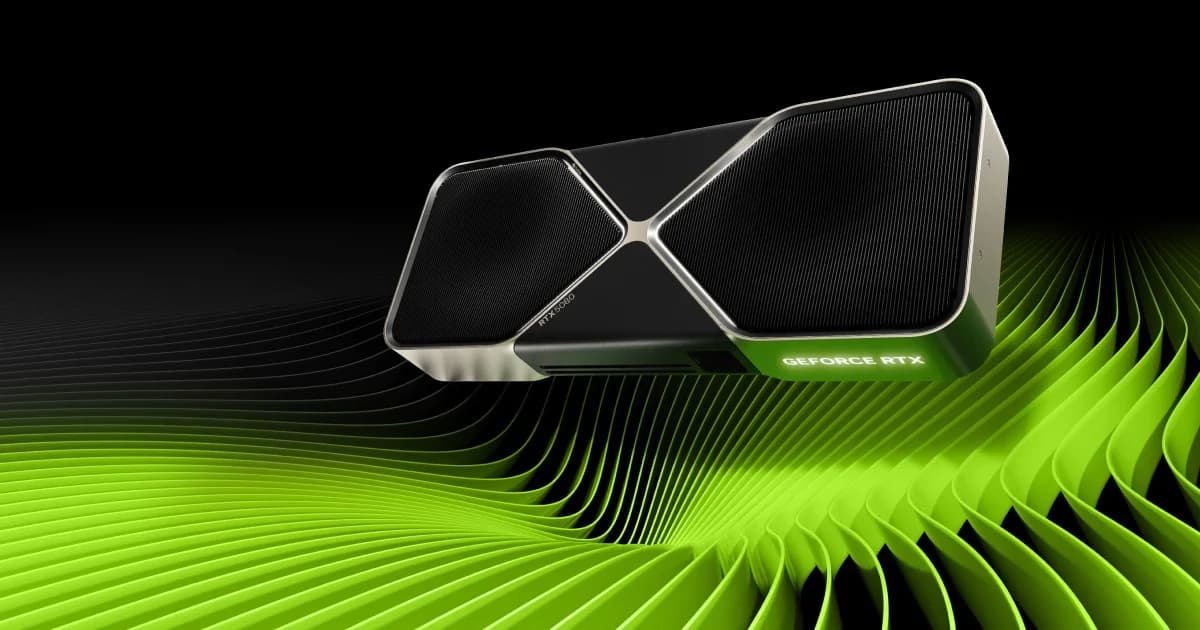
If you've tried to buy an AI-capable GPU in 2026, you already know something is very wrong. The RTX 5090 — listed at $1,999 MSRP — is selling for $5,000 to $6,000 on the secondary market. AMD quietly raised Radeon prices by 10%. NVIDIA bumped the DGX Spark by $700. And finding any high-end GPU at MSRP requires either extreme luck or extreme patience.
The cause isn't scalpers or hype. It's a global DRAM shortage — the single biggest supply chain disruption hitting AI hardware buyers right now. AI datacenter demand has consumed more than 20% of global DRAM production, sending memory prices soaring and dragging GPU prices up with them. The shortage is projected to last through Q3-Q4 2026.
This guide breaks down exactly what's happening, which GPUs are affected (and which aren't), when prices will normalize, and what to buy right now if you need AI hardware despite the market chaos. If you've been following our GPU price analysis for 2026, consider this the companion piece — that covers static price-per-performance; this covers the why, the timeline, and strategic buying advice for the current market.
What's Causing the 2026 DRAM Shortage?
The root cause is simple but unprecedented: AI datacenter demand is eating the world's memory supply.
Every major cloud provider and AI lab is racing to deploy NVIDIA H100, H200, and B200 GPUs for training and serving large language models. These datacenter GPUs use HBM3 and HBM3e — High Bandwidth Memory that's manufactured on the same DRAM production lines as consumer memory. When Samsung, SK Hynix, and Micron allocate more capacity to HBM3 for datacenter orders, there's less capacity left for GDDR7 and standard DRAM.
Conventional DRAM contract pricing rose roughly 93–98% quarter-over-quarter in Q1 2026 (TrendForce, 2026-06-01), driven primarily by HBM demand from hyperscaler AI deployments. Consumer GDDR7 supply has been the casualty: it competes for the same wafer capacity and loses.
Here's how the supply chain breakdown works:
- HBM3/HBM3e demand: Datacenter GPUs like the H100 and A100 each require multiple HBM stacks. A single H100 uses 80GB of HBM3 — the equivalent memory capacity of three consumer GPUs. Hyperscalers are ordering hundreds of thousands of these chips.
- GDDR7 cannibalization: DRAM fabs have finite capacity. Every wafer allocated to HBM3 is a wafer not making GDDR7 for consumer GPUs. GDDR7 supply has contracted by an estimated 30-40% from projected levels.
- DRAM price spiral: With supply constrained and demand surging, conventional DRAM contract prices rose roughly 93–98% QoQ per TrendForce. GPU manufacturers pass these costs through — or worse, supply shortages create secondary market premiums far exceeding the underlying cost increase.
- Geopolitical factors: US export controls on advanced semiconductor equipment to China have slowed capacity expansion at some DRAM fabs, while fab concentration in South Korea (Samsung, SK Hynix) creates geographic supply risk.
The mechanism is a structural imbalance in how DRAM capacity gets allocated. HBM yields worse than standard DRAM, so every gigabyte of HBM consumes more raw wafer than a gigabyte of GDDR would. Until new fabs come online, consumer memory stays supply-constrained — that is a physical constraint, not a pricing decision someone can reverse.
The critical insight for buyers: not all memory types are equally affected. GDDR7 and HBM3 are severely constrained. GDDR6 and GDDR6X — used in previous-gen and budget GPUs — have a much more stable supply chain because they don't compete directly with datacenter HBM for fab capacity. LPDDR5X, used in Apple Silicon, comes from a separate supply chain entirely. This creates real buying opportunities if you know where to look.
How the Shortage Hits GPU Prices — Brand by Brand
The DRAM shortage doesn't hit every GPU equally. The impact depends on which memory type each card uses, how supply-constrained that memory is, and how much secondary market speculation is layered on top. Here's the brand-by-brand breakdown as of April 2026.
NVIDIA: The Hardest Hit
NVIDIA's Blackwell-generation GPUs use GDDR7, the most supply-constrained consumer memory type. The flagship RTX 5090 (MSRP $1,999 – $2,199) is selling for $5,000 to $6,000 on secondary markets — a 150%+ premium. The RTX 5080 (MSRP $999 – $1,099) is somewhat less inflated but still difficult to find at list price. NVIDIA also raised the DGX Spark price by $700, to $4,699, citing component costs.
Previous-generation Ada Lovelace cards like the RTX 4090 ($1,599 – $1,999) and RTX 4080 SUPER ($949 – $1,099) use GDDR6X, which is less constrained — but their prices have firmed up as buyers pivot from unavailable Blackwell stock to available Ada cards. Used RTX 4090 prices have actually increased over the past quarter as demand shifts to the secondary market.
AMD: Moderate Impact
AMD confirmed a 10%+ price increase across the Radeon lineup, per Tom's Hardware reporting. The Instinct MI250X series for datacenter use remains supply-constrained. Consumer Radeon cards using GDDR6 are less affected than NVIDIA's GDDR7-based lineup, but AMD's smaller market share means lower volume production and less pricing leverage with memory suppliers.
Intel: Relatively Insulated
Intel's Arc B-series GPUs are the sleeper pick of this shortage. The Intel Arc B580 ($249 – $289) uses GDDR6 — not GDDR7 or HBM — which means it draws from a supply chain that's barely affected by the AI datacenter memory crunch. Street prices for the Arc B580 remain near MSRP. For budget-conscious buyers, this is the most important insight in this article.
Apple: Unaffected
Apple Silicon uses LPDDR5X unified memory, manufactured on a completely separate supply chain from GDDR and HBM. The Mac Mini M4 Pro ($1,399 – $1,599) and Mac Studio M4 Max ($1,999 – $4,499) have held steady pricing throughout the shortage. If you're considering the unified memory approach for local AI, the DRAM shortage actually makes Apple Silicon more competitive relative to discrete GPUs than it was six months ago.
MSRP vs. Street Price Tracker — April 2026
| GPU | Memory Type | MSRP / List Price | Street Price (Apr 2026) | Premium |
|---|---|---|---|---|
| RTX 5090 | 32GB GDDR7 | $1,999 – $2,199 | $5,000 – $6,000 | ~150% |
| RTX 5080 | 16GB GDDR7 | $999 – $1,099 | $1,200 – $1,400 | ~20-30% |
| RTX 4090 | 24GB GDDR6X | $1,599 – $1,999 | $1,800 – $2,200 | ~15% |
| RTX 4080 SUPER | 16GB GDDR6X | $949 – $1,099 | $1,000 – $1,200 | ~10% |
| RTX 3090 (used) | 24GB GDDR6X | $699 – $999 | $700 – $999 | Minimal |
| RTX 5060 Ti | 16GB GDDR7 | $429 – $479 | $500 – $600 | ~20% |
| RTX 4060 Ti 16GB | 16GB GDDR6 | $399 – $449 | $400 – $449 | Minimal |
| Intel Arc B580 | 12GB GDDR6 | $249 – $289 | $249 – $289 | None |
| Mac Mini M4 Pro | 24GB LPDDR5X | $1,399 – $1,599 | $1,399 – $1,599 | None |
Source: MSRP from manufacturer listings; street prices compiled from Amazon, Newegg, eBay, and StockX marketplace data as of April 2026. Prices fluctuate daily.
The pattern is clear: the closer a GPU is to the HBM/GDDR7 supply chain, the higher the premium. GDDR6-based cards and Apple Silicon are barely affected. This is the single most actionable insight for anyone buying AI hardware right now.
When Will GPU Prices Drop? Timeline and Forecasts
Every buyer wants the same answer: when does this end? Based on analyst projections from TrendForce, IC Insights, and industry reporting, here's the realistic timeline.
Q2 2026 (Now – June): Peak shortage
We're currently in the worst of it. DRAM contract prices are at cycle highs, GDDR7 allocation remains tight, and secondary market premiums on Blackwell GPUs show no signs of easing. If you need hardware now, buy strategically (see next section).
Q3 2026 (July – September): Early relief signs
Samsung's P4 fab in Pyeongtaek and SK Hynix's M16 facility in Icheon are both in advanced stages of equipment installation. IC Insights projects initial production from these facilities in Q3 2026, though volumes will be modest at first. DRAM contract prices may begin plateauing rather than continuing to climb.
Q4 2026 (October – December): Price stabilization
As new fab capacity ramps, DRAM supply should start catching up with demand. TrendForce's baseline projection is for GDDR7 supply to normalize by Q4 2026, though this depends on datacenter demand not accelerating further. Street prices for Blackwell GPUs should begin falling toward — but not reaching — MSRP.
H1 2027: Full normalization
With Samsung P4 and SK Hynix M16 at meaningful production volumes, plus reduced seasonal datacenter ordering, the DRAM market should reach equilibrium. GPU street prices should approximate MSRP. This is also when NVIDIA's next consumer generation (RTX 60 series) is expected to launch.
What About the RTX 60 Series?
Don't wait for it. Multiple outlets — Tom's Hardware, PC Gamer, The Information — have confirmed that NVIDIA is not releasing new consumer GPUs in 2026. The RTX 60 series is delayed to 2027 at the earliest, with some reports suggesting early 2028. NVIDIA is prioritizing Blackwell die production for datacenter B200/B100 GPUs where margins are 5-10x higher than consumer cards. If your buying decision depends on "the next generation," your timeline just got 12-18 months longer.
The economics behind that are not subtle: a Blackwell wafer sold into the datacenter earns NVIDIA far more than the same silicon sold as a consumer card, so as long as datacenter demand holds, the consumer refresh cycle stays frozen.
Best GPUs to Buy Right Now Despite the Shortage
Knowing the shortage timeline changes the buying calculus. Here are the best picks for each budget tier, weighted for current market reality — not just specs on paper. For a broader price-per-performance analysis, see our full AI GPU buying guide.
Best Overall Value: RTX 5080
The RTX 5080 ($999 – $1,099 MSRP) is the least inflated Blackwell GPU. While the RTX 5090 carries a 150% street premium, the 5080's premium is only 20-30% — and it's increasingly findable at or near MSRP from authorized retailers. You get 16GB GDDR7, Blackwell's 5th-gen tensor cores, and enough VRAM to run 13B-30B models at Q4 quantization comfortably. For a direct comparison with the previous generation, see our RTX 5080 vs RTX 4080 SUPER breakdown.
Best for: Buyers who want current-gen Blackwell performance without the 5090's absurd secondary market premium. The sweet spot for running models like Phi-4 14B and Qwen 3 7B at full speed.
Best VRAM Per Dollar: Used RTX 3090
The RTX 3090 ($699 – $999) is the shortage-era value champion. It delivers 24GB of GDDR6X — the same VRAM capacity as the RTX 4090 — at a fraction of the price. Because it uses GDDR6X (not GDDR7), it's drawing from a stable supply chain with minimal price inflation. At Q4 quantization, it runs 70B-parameter models at roughly 9 tokens per second — usable for local inference and development. For a detailed comparison with newer budget options, read our RTX 3090 vs RTX 5060 Ti analysis.
Best for: Maximum VRAM on a budget. Ideal for running larger models like DeepSeek R1 70B at Q4 without breaking the bank.
Best Budget Pick: Intel Arc B580
The Intel Arc B580 ($249 – $289) is the most shortage-proof GPU you can buy. It uses GDDR6 memory — completely outside the GDDR7/HBM supply chain crunch — and its street price has barely moved. You get 12GB of VRAM, enough for 7B-8B models at Q4 and Gemma 3 9B with some quantization. Intel's OpenVINO ecosystem is less mature than CUDA, but llama.cpp and Ollama both support it well. See our detailed Arc B580 review and the RTX 4060 Ti vs Arc B580 comparison for performance benchmarks.
Best for: Budget builds under $300. The best VRAM-per-dollar at any price point right now, especially for running Llama 4 Scout 8B and DeepSeek R1 7B.
Apple Alternative: Mac Mini M4 Pro
The Mac Mini M4 Pro ($1,399 – $1,599) sidesteps the DRAM shortage entirely. Apple's unified memory architecture uses LPDDR5X from a completely different supply chain — no competition with GDDR7 or HBM3. You get 24GB of unified memory, completely silent operation, and seamless macOS integration with Ollama. The tradeoff is no CUDA support, but for pure inference workloads the performance is excellent. Compare the economics against NVIDIA in our RTX 5090 vs Mac Studio M4 Max and side-by-side comparison pages.
Best for: Buyers who want zero exposure to the DRAM shortage. Particularly attractive if you already use macOS and value silent operation — see our full mini PC guide for more compact options.
Smart Buying Strategies During a DRAM Shortage
Beyond picking the right GPU, here are tactical strategies to maximize value in the current market. For general budget advice, our AI on a budget hub has additional tips.
1. Buy Used — GDDR6X Supply Is Stable
The used GPU market is your best friend right now. RTX 3090 and RTX 4090 cards use GDDR6X, which has a stable supply chain. Used RTX 3090 prices ($699 – $999) have barely budged because sellers aren't dealing with replacement cost inflation the way GDDR7-based cards are. A used RTX 3090 gives you 24GB of VRAM — enough for 70B Q4 models — at roughly the same price as a new RTX 5060 Ti with 8GB less VRAM.
2. Consider Multi-GPU Setups
Two used RTX 3090s give you 48GB of total VRAM for $1,400-$2,000 — less than a single RTX 5090 at MSRP, let alone street price. Multi-GPU setups with llama.cpp can split model layers across cards for inference. The tradeoff is higher power draw and more complex setup, but the economics during a shortage are compelling. Our multi-GPU setup guide walks through the configuration step by step.
3. Apple Silicon as a Hedge
If you're not locked into the CUDA ecosystem, Apple Silicon offers complete insulation from the DRAM shortage. The Mac Mini M4 Pro ($1,399 – $1,599) with 24GB unified memory or the Mac Studio M4 Max ($1,999 – $4,499) with up to 128GB give you predictable pricing, zero noise, and a growing local AI ecosystem via MLX and Ollama. The M4 Max's 128GB configuration can run models that no single consumer GPU can fit in VRAM.
4. Avoid These Traps
- Don't wait for RTX 60 series. Confirmed delayed to 2027-2028. You'll be waiting 12-18+ months with no guarantee of better pricing.
- Don't pay above $6,000 for an RTX 5090. At that price, you're better off with a Mac Studio M4 Max (128GB, $4,499) or two RTX 3090s plus a quality workstation build.
- Don't panic-buy GDDR7 cards at peak premium. If you're not in a rush, GDDR7 supply is projected to improve by Q4 2026. Buy GDDR6-based hardware now; upgrade to Blackwell later when premiums subside.
- Don't ignore the budget tier. The Intel Arc B580 and RTX 4060 Ti 16GB are legitimate AI-capable GPUs that haven't been affected by this shortage. See our budget GPU guide for more options.
5. Buy Mini PCs for Lightweight Workloads
Not every AI workload needs a dedicated GPU. The Beelink SER8 ($449 – $599) can run 7B models on its integrated Radeon 780M and its pricing is completely unaffected by the DRAM shortage. For AI agent hosting, code completion, and small model inference, mini PCs remain excellent value. See our local LLM guide for setup instructions.
How This Affects Your AI Model Choices
When VRAM is expensive, you optimize around it. The shortage should change how you think about model selection and configuration — not just hardware.
Quantization Matters More Than Ever
Quantization — running models at INT4 or INT8 precision instead of FP16 — reduces VRAM requirements by 50-75%. A 70B model that needs 140GB at FP16 fits in 40GB at Q4 quantization. During a shortage that makes every gigabyte of VRAM more expensive, quantization is effectively free hardware savings. Read our VRAM guide for the complete breakdown of quantization levels vs. quality tradeoffs.
Smaller Models, Bigger ROI
The efficiency gains in 2026's model landscape mean you don't need 70B parameters to get excellent results. Consider these options:
- Qwen 3 7B — Fits in 4-5GB VRAM at Q4. Excellent coding and reasoning for its size. Runs on virtually anything.
- Gemma 3 9B — 6GB VRAM at Q4. Strong general-purpose performance with multimodal capabilities.
- Phi-4 14B — 8-9GB VRAM at Q4. Punches well above its weight class on reasoning and math benchmarks.
- DeepSeek R1 7B — 4-5GB VRAM at Q4. Strong reasoning model that runs on budget hardware.
- Llama 4 Scout 8B — Meta's latest efficient model. 5-6GB at Q4 with strong multilingual performance.
All of these run comfortably on a $249 Intel Arc B580 or any 8GB+ GPU. During a shortage, getting 90% of the quality at 10% of the VRAM cost is the smart play.
CPU Offloading as a Free Upgrade
llama.cpp supports splitting model layers between GPU VRAM and system RAM. This means you can run models larger than your GPU's VRAM — the GPU-hosted layers run fast, system RAM layers run slower, and you get a blended throughput that's slower than pure GPU but much faster than pure CPU. With 64GB of DDR5 system RAM (~$100), you can extend a 12GB GPU to handle 30B+ models. Our guide to running LLMs locally covers the setup in detail.
Bottom Line: What to Do Right Now
The 2026 DRAM shortage is real, projected to last through Q3-Q4 2026, and it's not going away by wishing for RTX 60 series cards that won't arrive until 2027-2028. But it's also not a reason to stop building. The shortage is concentrated in GDDR7 and HBM3 — if you buy smart, you can sidestep most of the price inflation entirely.
If your budget is under $300: Buy the Intel Arc B580 ($249 – $289). GDDR6, zero shortage premium, 12GB VRAM.
If your budget is $700-$1,000: Buy a used RTX 3090 ($699 – $999). 24GB GDDR6X, minimal inflation, proven for 70B Q4 models.
If your budget is $1,000-$1,600: Choose between the RTX 5080 ($999 – $1,099) for CUDA/Blackwell performance, or the Mac Mini M4 Pro ($1,399 – $1,599) for total shortage immunity and silent operation.
If money is no object: The Mac Studio M4 Max with 128GB unified memory ($4,499) is better value than a $5,000+ RTX 5090 right now — and it can fit models in memory that no single consumer GPU can match.
For the full product catalog with current pricing and affiliate links, visit our AI GPU buying guide. We update street prices weekly as the shortage evolves.
Last updated: April 8, 2026. Street prices and shortage projections are based on TrendForce, IC Insights, Jon Peddie Research, Tom's Hardware, and marketplace data. We'll update this page as conditions change.
Frequently Asked Questions
Why are GPU prices so high in 2026?
GPU prices in 2026 are driven by a global DRAM shortage. AI datacenter demand now consumes over 20% of global DRAM production, and the shift to HBM3/HBM3e for datacenter GPUs like the H100 and B200 has cannibalized consumer GDDR7 supply. TrendForce reports conventional DRAM contract prices rose roughly 93–98% quarter-over-quarter in Q1 2026. The result: GPUs using GDDR7 memory — including the RTX 5090 and RTX 5080 — are selling at significant premiums above MSRP on the secondary market.
When will GPU prices drop in 2026?
Analysts at TrendForce and IC Insights project the DRAM shortage will persist through Q3-Q4 2026. New fabrication facilities — Samsung's P4 fab and SK Hynix's M16 — are expected to come online in late 2026 to early 2027. The best-case scenario is price stabilization in Q4 2026 with normalization in H1 2027. NVIDIA has confirmed no new consumer GPUs (RTX 60 series) until 2027-2028, so there's no next-gen relief coming this year.
Should I buy a GPU now or wait until prices drop?
It depends on your timeline. If you need AI hardware now, buy models that use GDDR6 memory — the Intel Arc B580 ($249 – $289) and used RTX 3090 ($699 – $999) are barely affected by the shortage because GDDR6 supply is separate from the constrained GDDR7/HBM production lines. If you can wait 6-9 months, prices should begin normalizing in Q4 2026 as new DRAM fabs come online. Avoid waiting for RTX 60 series GPUs — they're confirmed delayed to 2027-2028.
Which GPUs are least affected by the 2026 DRAM shortage?
GPUs using older GDDR6 or GDDR6X memory are significantly less affected because the shortage is concentrated in GDDR7 and HBM3 production. The Intel Arc B580 (GDDR6, $249 – $289), RTX 4060 Ti 16GB (GDDR6, $399 – $449), and used RTX 3090 (GDDR6X, $699 – $999) all use memory types with stable supply chains. Apple Silicon devices like the Mac Mini M4 Pro ($1,399 – $1,599) use LPDDR5X from a completely separate supply chain and are unaffected.
How does the DRAM shortage affect AI model choices?
The shortage makes VRAM more expensive, which means quantization and model efficiency matter more than ever. Running models at Q4 quantization instead of FP16 cuts VRAM requirements by 75%. Smaller, efficient models like Qwen 3 7B, Gemma 3 9B, and Phi-4 14B deliver strong results on less hardware. CPU offloading with llama.cpp is also a free technique to reduce VRAM usage — you can run larger models by splitting layers between GPU and system RAM.