RTX 5090 Ti / Titan Blackwell: Should You Wait or Buy Now for AI in 2026?
Leaked specs point to a full GB202 die with ~24,064 CUDA cores and 15–20% faster AI inference than the RTX 5090. Here's what we know, when it might launch, and a clear decision framework for whether to buy a high-end GPU now or wait.
Compute Market Team
Our Top Pick
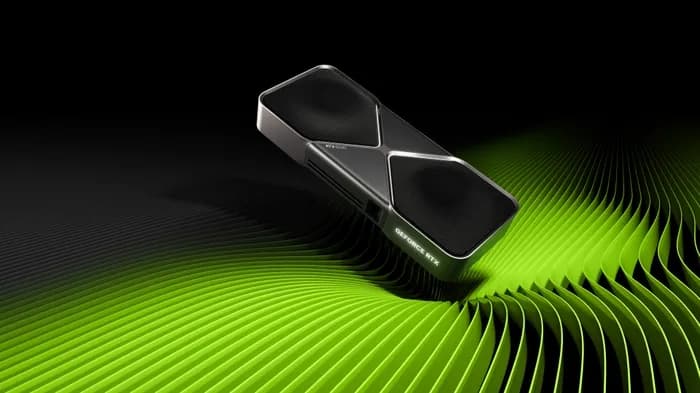
If you're shopping for a high-end GPU for AI workloads in 2026, you've probably seen the rumors: NVIDIA may be preparing an RTX 5090 Ti or Titan Blackwell variant — a card built on the full GB202 die with approximately 24,064 CUDA cores, 700–750W TDP, and potentially up to 48GB of VRAM. Multiple credible sources including VideoCardz, TweakTown, and NotebookCheck have reported on the leaked specifications, pointing to a possible Q3 2026 launch.
The question every serious AI hardware buyer is asking right now: Should I buy an RTX 5090 today, or wait 3–6 months for what could be the most powerful consumer GPU ever made?
This guide cuts through the spec-leak noise and gives you a data-backed decision framework specifically for AI workloads — not gaming benchmarks. We'll translate CUDA core counts into estimated tokens per second, VRAM into model capacity, and power draw into real cooling requirements. Whether you're running local LLMs, fine-tuning models, or generating images and video, here's exactly how to think about this decision.
What We Know About the RTX 5090 Ti / Titan Blackwell
As of September 2026, NVIDIA has not officially confirmed the RTX 5090 Ti or any Titan Blackwell product. What we have are consistent leaks from multiple reliable sources that paint a fairly detailed picture.
Andreas Schilling at VideoCardz, the most prolific GPU leak aggregator, has reported that NVIDIA is preparing a card based on the full GB202 die — the complete Blackwell silicon that the standard RTX 5090 doesn't fully utilize. The current RTX 5090 uses a cut-down GB202 with 21,760 CUDA cores. The full die would enable approximately 24,064 CUDA cores — an 11% increase in raw shader count.
Jon Martindale at TweakTown corroborated these reports, adding estimates of a 700–750W TDP — a significant jump from the RTX 5090's already substantial 575W. This power envelope suggests NVIDIA is targeting maximum performance rather than efficiency.
Here's what the leaked specifications look like compared to the current lineup:
| Spec | RTX 5090 Ti (Rumored) | RTX 5090 | RTX 4090 |
|---|---|---|---|
| CUDA Cores | ~24,064 | 21,760 | 16,384 |
| Architecture | Blackwell (GB202 full) | Blackwell (GB202 cut) | Ada Lovelace (AD102) |
| VRAM | 32–48GB GDDR7/7X | 32GB GDDR7 | 24GB GDDR6X |
| Memory Bandwidth | ~2,000+ GB/s (est.) | 1,792 GB/s | 1,008 GB/s |
| TDP | 700–750W | 575W | 450W |
| Tensor Cores | 5th Gen (full count) | 5th Gen | 4th Gen |
| Expected Price | $2,499–$2,999+ | $1,999–$2,199 | $1,599–$1,999 |
| Launch | Q3 2026 (rumored) | Available now | Available now |
The naming remains uncertain. NVIDIA could ship this as an "RTX 5090 Ti," an "RTX Titan Blackwell," or even a "5090 Super." The naming convention matters less than the silicon — it's the full GB202 die, whatever they call it.
TrendForce, the market intelligence firm, has reported that NVIDIA has no new gaming GPU architecture planned for 2026. This makes the Ti/Titan variant potentially the only major new GPU launch this year — a Blackwell refresh, not a new generation.
RTX 5090 Ti vs RTX 5090: Expected AI Performance Delta
For AI workloads, the performance difference between the RTX 5090 Ti and RTX 5090 comes down to three factors: CUDA core count, tensor core throughput, and memory bandwidth. Let's project each one.
CUDA and Tensor Core Scaling
The jump from 21,760 to ~24,064 CUDA cores represents an 11% increase. For inference workloads, performance doesn't scale perfectly linearly with core count — memory bandwidth and software optimization matter significantly. Based on historical scaling from RTX 3090 → 3090 Ti and RTX 2080 → 2080 Ti, expect 10–15% real-world inference improvement from cores alone.
That matches the shape of every Ti release so far: a consistent 10–20% uplift over the base card and never a transformational one. You are buying the full die, not a new architecture.
Memory Bandwidth and VRAM
If NVIDIA ships GDDR7X (an improved variant of GDDR7), memory bandwidth could jump from 1,792 GB/s to over 2,000 GB/s. For LLM inference, where performance is often memory-bandwidth-bound rather than compute-bound, this could provide an additional 5–10% throughput gain on top of the core count increase.
The real wildcard is VRAM capacity. If NVIDIA ships a 48GB variant, it would be transformational for AI users — enabling unquantized 70B parameter models in full FP16 precision without CPU offloading. However, most analysts consider 32GB more likely, which would match the current RTX 5090.
Projected AI Inference Performance
Based on the RTX 5090's current benchmarks from LM Studio Community testing and core count scaling, here are estimated tok/s numbers for the Ti variant:
| Model | RTX 5090 Ti (Est.) | RTX 5090 | RTX 4090 | RTX 3090 |
|---|---|---|---|---|
| Llama 3 8B (Q4) | ~110 tok/s | 95 tok/s | 62 tok/s | 48 tok/s |
| Llama 3 70B (Q4) | ~21 tok/s | 18 tok/s | 12 tok/s | 9 tok/s |
| SDXL (it/s) | ~14.5 it/s | 12.5 it/s | 8.2 it/s | 5.8 it/s |
Sources: RTX 5090 and 4090 benchmarks from LM Studio Community and TechPowerUp; Ti estimates based on 15–18% scaling from core count and bandwidth improvements.
These are meaningful gains — but not generational. The RTX 5090 Ti would make large models feel smoother, not suddenly enable workloads that are impossible on the 5090. For running models like Llama 4 Maverick 70B or DeepSeek R1 70B, both cards handle them capably; the Ti just does it ~15–20% faster.
When Will It Launch? Timeline Analysis
NVIDIA hasn't announced a launch date, but we can triangulate from multiple signals:
TrendForce market intelligence states there's no new NVIDIA gaming architecture in 2026. This means any new GPU release this year is a Blackwell refresh — consistent with a Ti or Titan product using the same GB202 silicon with the full die enabled.
Historical patterns support a Q3 2026 timeline. The RTX 4090 launched in October 2022, and the RTX 4090 Ti was heavily rumored but never shipped (NVIDIA instead released the Titan-class 4090 at the top). The RTX 3090 Ti launched in March 2022, roughly 17 months after the RTX 3090. The RTX 2080 Ti shipped alongside the RTX 2080. The pattern varies, but a 6–12 month gap after the base flagship is typical.
The original leak consensus pointed to July–September 2026, based on:
- VideoCardz reporting Q3 2026 as the target
- TrendForce confirming no new architecture — so it's this or nothing for 2026
- NVIDIA's typical Computex (June) or GTC reveal → launch 4–8 weeks later pattern
Update (September 2026): that window has effectively closed. There is still no official NVIDIA announcement of an RTX 5090 Ti or Titan Blackwell, and no retail listings have appeared. The realistic earliest window is now Q4 2026, with a CES 2027 reveal equally plausible. That changes the decision math below in one important way: the wait is no longer a defined three-to-six months — it's open-ended, with no confirmed product at the end of it.
However, there's a complicating factor: the ongoing DRAM shortage. If NVIDIA pushes for 48GB of GDDR7X, memory supply constraints could delay the launch or force a 32GB configuration. Any 2026 product that depends on next-gen memory is exposed to the same supply squeeze, so do not count on launch-day availability even if NVIDIA announces on schedule.
The "Should You Wait?" Decision Framework
Here's a structured way to make this decision based on your actual situation — not speculation fever.
Buy Now If:
- You need GPU compute today. If you're running AI workloads professionally — serving models, fine-tuning, generating content — every day without adequate hardware is lost productivity. Three to six months of waiting has a real cost — and with the rumored Q3 window now passed, that wait has no defined end date.
- The RTX 5090 already handles your workload. If 32GB VRAM and 95 tok/s on 8B models meets your needs, the Ti's incremental 15–20% uplift doesn't change your workflow meaningfully.
- You're concerned about pricing. Ti/Titan variants historically launch at or above the base flagship price. Combined with the DRAM shortage inflating GPU prices across the board, the Ti could easily debut above $2,500 — and street prices could be much higher.
- You can always sell and upgrade later. High-end GPUs hold resale value well. Buying an RTX 5090 now, using it for 6 months, then selling when the Ti drops is often the smart play — you pay the depreciation delta rather than the full opportunity cost of waiting.
The RTX 5090 at $1,999–$2,199 is the best high-end GPU for AI you can buy today. Its 32GB of GDDR7 VRAM, 21,760 CUDA cores, and 5th-gen tensor cores handle everything from Qwen 3 72B inference to Stable Diffusion XL batch generation. For a deep dive on how it stacks up against last generation, see our RTX 5090 vs RTX 4090 comparison.
Wait If:
- You don't urgently need a GPU. If your current card handles your workloads or you're in the planning phase of a new build targeting Q3/Q4, there's no penalty for waiting.
- You specifically need 48GB VRAM. If the Ti ships with 48GB, it would be the only consumer card capable of running unquantized 70B models — a genuine capability difference, not just a speed bump.
- You're building a multi-GPU rig. If you're planning a multi-GPU setup, waiting to see the full product stack (Ti pricing, power requirements, NVLink support) makes sense before committing to an architecture.
- Your current card is "good enough" for now. If an RTX 4090 or even 3090 handles your daily workloads, the marginal improvement from waiting for the very best Blackwell card may be worth the patience.
The Opportunity Cost Calculator
Here's a simple way to quantify your decision. Estimate the value of GPU compute per month for your use case:
| Scenario | Monthly Value of GPU Compute | 5-Month Wait Cost | Verdict |
|---|---|---|---|
| Professional AI developer | $500–$2,000+ | $2,500–$10,000+ | Buy now |
| Freelance content creator | $200–$500 | $1,000–$2,500 | Likely buy now |
| Hobbyist / researcher | $0–$100 | $0–$500 | Can wait |
| New build from scratch | Depends on timeline | Varies | Wait if Q4 build |
If the opportunity cost of waiting exceeds the price difference between the 5090 and 5090 Ti ($500–$800 estimated), buy now.
Best High-End GPUs to Buy Right Now
If you've decided to buy now — or want a capable card while you wait for more Ti information — here are the best options ranked by AI value.
Best Overall: NVIDIA RTX 5090 ($1,999–$2,199)
The best GPU for AI in 2026 — period. 32GB GDDR7, Blackwell architecture with 5th-gen tensor cores, and PCIe 5.0. Runs Llama 4 Maverick 70B at 18 tok/s with Q4 quantization and handles every major open-source model. If you're buying one GPU for AI, this is it. See our full Best GPU for AI guide for the complete breakdown, or check our AI GPU Buying Guide hub for all GPU comparisons.
Best Price/Performance: NVIDIA RTX 5080 ($999–$1,099)
Half the price of the 5090 with excellent performance for 7B–30B parameter models. The 16GB GDDR7 VRAM is the main limitation — you'll need heavy quantization for anything above 30B parameters. But for Flux.1 Dev image generation and smaller LLMs, the RTX 5080 is the best value in the Blackwell lineup. Read our RTX 5090 vs RTX 5080 comparison for detailed benchmarks.
Previous-Gen Flagship: NVIDIA RTX 4090 ($1,599–$1,999)
Still an excellent AI GPU with 24GB GDDR6X and proven benchmark results. If you find one at a good price, the RTX 4090 runs 70B models (with quantization) and delivers 62 tok/s on 8B models. The Ada Lovelace architecture is mature with broad software support. The key advantage over the RTX 5080 is 24GB vs 16GB VRAM — model capacity often matters more than raw speed. For the full comparison, see RTX 5090 vs 4090.
Budget 24GB Option: NVIDIA RTX 3090 ($699–$999)
The best budget option for AI inference with 24GB VRAM. Available on the used market at $699–$999, the RTX 3090 still delivers 48 tok/s on 8B models and 9 tok/s on 70B — usable for development and testing. It uses GDDR6X memory that's largely unaffected by the current DRAM shortage, making it one of the easier GPUs to find at fair prices. If you want to get started with local AI on a budget, this card punches well above its current street price. To see exactly how wide the generational gap has grown, see our RTX 5090 vs RTX 3090 comparison, or RTX 4090 vs RTX 3090 if you're weighing the two used-market 24GB cards against each other.
Full Comparison Table
| GPU | VRAM | 8B Model (tok/s) | 70B Model (tok/s) | Price | Best For |
|---|---|---|---|---|---|
| RTX 5090 | 32GB GDDR7 | 95 | 18 | $1,999–$2,199 | All AI workloads, no compromises |
| RTX 5080 | 16GB GDDR7 | 72 | N/A (offload) | $999–$1,099 | 7B–30B models, image gen |
| RTX 4090 | 24GB GDDR6X | 62 | 12 | $1,599–$1,999 | 70B models with quantization |
| RTX 3090 | 24GB GDDR6X | 48 | 9 | $699–$999 | Budget inference, development |
| RTX 4080 Super | 16GB GDDR6X | 52 | N/A (offload) | $949–$1,099 | Budget mid-tier, 7B–13B models |
Benchmark sources: LM Studio Community (tok/s), TechPowerUp (SDXL). 70B model tok/s require Q4 quantization; "N/A" indicates insufficient VRAM without heavy CPU offloading.
What About AMD and Apple Silicon Alternatives?
If you're considering whether to wait for the RTX 5090 Ti, it's also worth asking whether NVIDIA is the right platform at all for your use case.
Apple Mac Studio M4 Max ($1,999–$5,999)
The Mac Studio M4 Max with 128GB unified memory can run DeepSeek R1 70B and Qwen 3 72B unquantized — something no consumer GPU can match for raw model capacity. If your bottleneck is VRAM rather than speed, Apple Silicon may be the better path. The tradeoff: no CUDA support means you're limited to MLX and llama.cpp for inference. For the head-to-head breakdown, see our RTX 5090 vs Mac Studio M4 Max comparison.
When Non-NVIDIA Makes More Sense Than Waiting
Consider Apple Silicon or AMD if:
- You need to run 70B+ models without quantization (128GB unified memory beats 32GB VRAM)
- Power consumption and noise matter — the Mac Studio is silent; a 750W GPU is not
- You're primarily doing inference, not fine-tuning or training (where CUDA dominance matters most)
- You want a complete, working system now rather than building a custom rig
For readers exploring the broader landscape of local AI hardware, our Local LLM Guide covers every platform from budget mini PCs to multi-GPU workstations.
Power and Cooling Reality Check
A 700–750W GPU isn't just a spec — it's a fundamental constraint on who can actually use this card. Let's be practical about what the rumored RTX 5090 Ti TDP means:
- PSU requirements: You'll need a 1,200W+ power supply minimum, likely 1,500W for headroom. The current RTX 5090 already demands a 1,000W PSU.
- Cooling: 750W of heat dissipation requires serious airflow or liquid cooling. Budget for a high-end AIO cooler or custom loop for the CPU, plus a case with excellent ventilation.
- Circuit capacity: A fully loaded system with a 750W GPU, high-end CPU, and peripherals could draw 1,000W+ from the wall. Verify your outlet and circuit breaker can handle sustained draw at this level.
- Noise: More power = more cooling = more fan noise. If quiet operation matters for your workspace, this is a significant downside compared to the RTX 5090 or Apple Silicon alternatives.
Past 600W you are dealing with enterprise-class power and thermal engineering inside a consumer case. Expect the coolers to be enormous, expensive and loud — and budget for the PSU and the airflow before you budget for the card.
Verdict: Wait or Buy Now?
As of September 2026, NVIDIA has not confirmed the RTX 5090 Ti or Titan Blackwell, but leaked specs suggest a full GB202 die with approximately 24,064 CUDA cores and 15–20% higher AI inference throughput than the RTX 5090.
For most AI users, the current RTX 5090 at $1,999–$2,199 remains the right purchase today.
Here's why: historical Ti variants deliver 10–20% more performance at similar or higher prices. That's meaningful but not transformational. The RTX 5090 already runs every major open-source model — from Llama 4 Maverick 70B to Flux.1 Dev — with strong performance. When the Ti eventually launches, the 5090 won't suddenly become slow. It will still be an excellent GPU that handles the vast majority of local AI workloads.
The only strong cases for waiting are:
- You specifically need 48GB VRAM and the Ti delivers it — this would be a genuine capability upgrade, not just a speed bump.
- You have zero urgency and are building a new rig from scratch targeting Q4 2026.
- You're planning a multi-GPU setup and want full clarity on the Blackwell product stack before committing.
For everyone else — developers shipping AI products, researchers who need compute today, businesses losing time to inadequate hardware — the math is simple. Five months of waiting at $500+/month in lost productivity exceeds any price premium the Ti will command. Buy the best GPU available now, put it to work, and upgrade later if the Ti justifies the delta.
If you're still deciding between price tiers, start with our comprehensive GPU prices and buying guide for 2026. For budget-conscious buyers who can't justify flagship pricing, our RTX 5060 Ti vs 5070 Ti comparison covers the mid-range Blackwell options. And for an alternative path entirely, our GPU for fine-tuning guide covers the best cards specifically for training workloads.
We'll update this post as new information drops. Bookmark it and check back — if NVIDIA confirms the RTX 5090 Ti at GTC or CES, we'll have the full analysis within 24 hours.
Frequently Asked Questions
When will the RTX 5090 Ti or Titan Blackwell be released?
NVIDIA has not officially announced the RTX 5090 Ti or Titan Blackwell. Based on leaked information from VideoCardz and TweakTown, a Q3 2026 (July–September) launch window was the original target — but as of mid-September 2026 that window has all but closed with no announcement, which pushes the realistic earliest date to Q4 2026 or later. TrendForce reports no new NVIDIA gaming GPU architecture in 2026, suggesting this would be a Blackwell refresh using the full GB202 die rather than a new generation. Historical NVIDIA Ti/Titan launch patterns support a 6–9 month gap after the base model, which aligns with a mid-to-late 2026 release.
What are the expected RTX 5090 Ti specs?
Leaked specs suggest the RTX 5090 Ti will use the full GB202 die with approximately 24,064 CUDA cores (vs 21,760 on the RTX 5090), a TDP of 700–750W, and either 32GB or 48GB of GDDR7 or GDDR7X memory. This translates to an estimated 15–20% improvement in AI inference throughput over the RTX 5090. However, these specifications are unconfirmed and based on early reports from hardware leakers — final specs could differ significantly.
Should I wait for the RTX 5090 Ti or buy the RTX 5090 now?
For most AI users, the RTX 5090 at $1,999–$2,199 is the right purchase today. Historical Ti variants typically deliver 10–20% more performance at similar or higher prices — meaningful but not generational. If you're actively losing productivity or revenue without a capable GPU, the opportunity cost of waiting 3–6 months outweighs the incremental gains. Wait only if you don't urgently need compute and are comfortable with potentially higher pricing and limited initial availability.
How much faster will the RTX 5090 Ti be for AI workloads?
Based on the ~11% increase in CUDA core count (24,064 vs 21,760) and potential memory bandwidth improvements from GDDR7X, the RTX 5090 Ti is projected to be 15–20% faster for AI inference. For LLM inference, this might translate to roughly 110 tok/s on Llama 3 8B (Q4) compared to 95 tok/s on the RTX 5090, and approximately 21 tok/s on 70B models vs 18 tok/s. These are estimates based on core count scaling — actual performance depends on architectural optimizations, memory bandwidth, and software support.
Will the RTX 5090 Ti have 48GB of VRAM?
Some leaks suggest a 48GB VRAM configuration using GDDR7X memory, while others point to 32GB matching the current RTX 5090. A 48GB model would be significant for AI users — it would run unquantized 70B models and larger context windows without CPU offloading. However, 48GB at GDDR7X speeds would substantially increase the board cost, potentially pushing pricing above $2,500. The more conservative 32GB configuration is considered more likely by most hardware analysts.