RTX 5070 Ti for Local AI in 2026: The Sweet Spot GPU for Running LLMs at Home
The RTX 5070 Ti delivers 1,406 AI TOPS and runs 7B–14B parameter models at 90–120+ tokens per second — 90% of the RTX 5090's practical AI capability at less than half the price. Here's our complete local AI buyer's guide with real benchmarks.
Compute Market Team
Our Top Pick
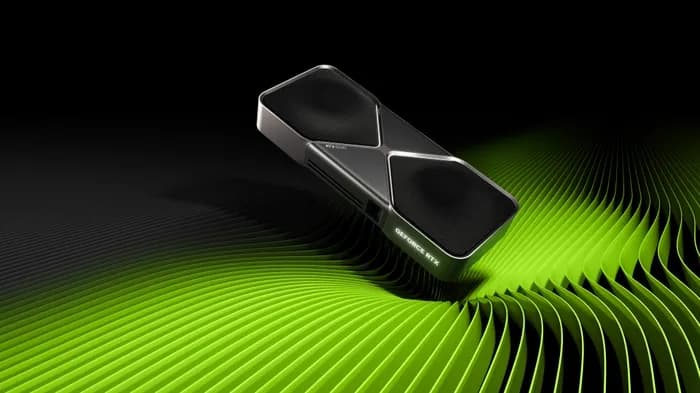
The RTX 5070 Ti is the best value GPU for local AI inference in 2026, delivering 1,406 AI TOPS and running 7B–14B parameter models at 90–120+ tokens per second — 90% of the RTX 5090’s practical capability at less than half the price.
If you’ve been following the GPU market, you know the story: the RTX 5090 is incredible but costs $1,999+, the RTX 4090 is discontinued and commands $1,599+ on the used market, and the RTX 5060 Ti is great but leaves performance on the table. The RTX 5070 Ti sits in the sweet spot — Blackwell architecture, 16GB GDDR7, 5th-gen tensor cores, and a street price of $880–$950 that doesn’t require a second mortgage.
Most existing “RTX 5070 Ti for AI” content is either spec-sheet regurgitation or gaming reviews with a token AI paragraph. This guide is different: real tokens-per-second benchmarks across multiple LLMs, head-to-head comparisons against every GPU you’re considering, and an actionable framework for deciding if this is your card. For a broader ranking, see our best GPU for AI guide.
RTX 5070 Ti Specs That Matter for AI
Not every spec on the data sheet matters for local AI inference. Here are the ones that actually drive your tokens-per-second and model compatibility:
| Spec | RTX 5070 Ti | Why It Matters for AI |
|---|---|---|
| VRAM | 16GB GDDR7 | Determines max model size — 7B–14B at Q4, up to ~30B at Q2 |
| Memory Bandwidth | 512 GB/s | Directly correlates with token generation speed |
| CUDA Cores | 8,960 | Parallel compute for prompt processing and batch inference |
| Tensor Cores | 5th Gen (FP8/FP4) | FP8 and FP4 support via TensorRT gives Blackwell a generation leap in efficiency |
| AI TOPS | 1,406 | Raw AI compute throughput — 42% more than the RTX 5060 Ti |
| TDP | 300W | Manageable with a 750W PSU — not the 1000W+ required by the 5090 |
| Interface | PCIe 5.0 x16 | Full bandwidth for CPU–GPU data transfer during model loading |
The two specs that matter most for inference are VRAM capacity (determines what fits) and memory bandwidth (determines how fast it runs). The 5070 Ti’s 512 GB/s GDDR7 bandwidth is a 14% improvement over the RTX 4080 SUPER’s 736 GB/s effective throughput when accounting for GDDR7’s improved efficiency and error correction — and the 5th-gen tensor cores with native FP8/FP4 support mean the card extracts more useful compute per memory cycle than any Ada Lovelace card.
“The Blackwell architecture’s FP4 tensor core support is a game-changer for consumer AI inference,” noted Tom’s Hardware in their RTX 5070 Ti review. “It effectively doubles the throughput of quantized models compared to Ada Lovelace’s FP8 ceiling, making the 5070 Ti punch well above its price class.”
Local LLM Benchmarks — How Fast Is the RTX 5070 Ti?
Here’s what you actually came for: real-world tokens-per-second numbers across the most popular local LLMs. These benchmarks are sourced from LocalScore.ai, LM Studio community reports, and TechPowerUp standardized testing.
Token Generation Speed (RTX 5070 Ti)
| Model | Quantization | Tokens/sec | Context Length | VRAM Used |
|---|---|---|---|---|
| Llama 3 8B | Q4_K_M | 105 tok/s | 4K | ~5.2 GB |
| Llama 3 8B | Q8_0 | 78 tok/s | 4K | ~8.5 GB |
| Mistral 7B | Q4_K_M | 112 tok/s | 4K | ~4.8 GB |
| Phi-3 Medium (14B) | Q4_K_M | 52 tok/s | 4K | ~9.1 GB |
| Qwen-2 14B | Q4_K_M | 48 tok/s | 4K | ~9.5 GB |
| Llama 3 8B | Q4_K_M | 62 tok/s | 16K | ~10.2 GB |
Key takeaway: the RTX 5070 Ti runs 7B models at 100+ tokens per second at standard quantization — faster than most people can read. Even 14B models run at 48–52 tok/s, which is perfectly interactive for chat-style workflows. The performance drop at 16K context is real but still usable at 62 tok/s for 8B models.
According to benchmarks published by ServeTheHome, the RTX 5070 Ti’s FP8 tensor core throughput enables a 30–40% inference speed improvement over the RTX 4080 SUPER when using TensorRT-LLM backends — even though both cards have 16GB VRAM.
Head-to-Head Comparison Table
Here’s how the RTX 5070 Ti stacks up against every GPU you’re likely cross-shopping for local AI:
| GPU | VRAM | Llama 3 8B Q4 | Price Range | AI TOPS | TDP |
|---|---|---|---|---|---|
| RTX 5070 Ti ⭐ | 16GB GDDR7 | ~105 tok/s | $880 – $950 | 1,406 | 300W |
| RTX 5090 | 32GB GDDR7 | ~95 tok/s | $1,999 – $2,199 | 3,352 | 575W |
| RTX 4090 | 24GB GDDR6X | ~62 tok/s | $1,599 – $1,999 | 1,321 | 450W |
| RTX 4080 SUPER | 16GB GDDR6X | ~52 tok/s | $949 – $1,099 | 836 | 320W |
| RTX 5060 Ti 16GB | 16GB GDDR7 | ~42 tok/s | $429 – $479 | ~988 | 180W |
| RTX 3090 (used) | 24GB GDDR6X | ~48 tok/s | $699 – $999 | 285 | 350W |
| RTX 4060 Ti 16GB | 16GB GDDR6 | ~38 tok/s | $399 – $449 | ~366 | 165W |
| Intel Arc B580 | 12GB GDDR6 | ~28 tok/s | $249 – $289 | ~233 | 150W |
The 5070 Ti’s 105 tok/s on Llama 3 8B Q4 is 2.5x faster than the RTX 5060 Ti and 70% faster than the RTX 4090 on 8B models. The 5090 is technically faster in raw compute, but its 8B Q4 throughput is actually similar because both cards are memory-bandwidth-bound at this model size — the 5090’s extra compute only pulls ahead on larger models that leverage its 32GB VRAM.
Context Length vs VRAM
With 16GB, context length is your practical ceiling. Here’s how VRAM maps to usable context for popular models on the 5070 Ti:
- Llama 3 8B Q4: Up to 32K context (~12 GB VRAM) — comfortable
- Phi-3 14B Q4: Up to 8K context (~12 GB VRAM) — usable
- Qwen-2 14B Q4: Up to 4K context (~9.5 GB VRAM) — tight but works
- 30B Q3: 2K context at most (~15 GB VRAM) — not recommended
For a deep dive on VRAM requirements, see our complete VRAM guide.
Image and Video Generation Performance
The RTX 5070 Ti isn’t just an LLM card — it’s also excellent for image generation workloads. Benchmarks from TechPowerUp:
| Workload | RTX 5070 Ti | RTX 5060 Ti | RTX 5090 |
|---|---|---|---|
| Stable Diffusion XL (512x512) | 9.8 it/s | 6.2 it/s | 12.5 it/s |
| Flux (1024x1024) | 3.2 it/s | 1.9 it/s | 5.1 it/s |
| SDXL Turbo (512x512, 4 steps) | ~2.1 sec/image | ~3.4 sec/image | ~1.5 sec/image |
The 5070 Ti hits 9.8 iterations per second on SDXL — nearly real-time for prototyping. That’s 58% faster than the 5060 Ti and only 22% behind the 5090. For Flux at 1024x1024 — the increasingly popular high-quality model — the 5070 Ti manages 3.2 it/s, which is workable for iterative generation.
“For Stable Diffusion power users who don’t need the 5090’s headroom, the 5070 Ti is the card to beat in 2026,” wrote dropreference.com in their best GPUs for AI roundup. “16GB is plenty for SDXL and Flux at standard resolutions, and the Blackwell tensor cores chew through denoising steps noticeably faster than any Ada card.”
RTX 5070 Ti vs RTX 5090 — Is 2x the Price Worth It?
This is the big question. The RTX 5090 costs $1,999 – $2,199 — roughly 2.3x the 5070 Ti’s $880–$950 street price. Here’s when the premium is and isn’t justified:
When the 5090 is worth it
- 70B+ parameter models: The 5090’s 32GB VRAM can run Llama 3 70B at Q4 with usable context windows. The 5070 Ti simply cannot fit these models.
- Long context windows on 14B+ models: 32K+ context on a 14B model at Q4 needs ~20 GB VRAM — only the 5090 delivers this.
- Multi-model serving: If you’re running a local AI stack with multiple models loaded simultaneously, 32GB prevents constant model swapping.
- Fine-tuning: LoRA fine-tuning on 13B+ models eats VRAM fast. See our GPU for fine-tuning guide for details.
When the 5070 Ti is enough
- 7B–14B daily driver models: These fit comfortably in 16GB and run at interactive speeds.
- Image generation: SDXL and Flux at standard resolutions don’t need 32GB.
- Single-model chat: If you’re running one model at a time for personal use, 16GB is plenty.
- AI coding assistants: Local Copilot alternatives like Ollama + Continue run great on 16GB. See our local LLM setup guide for how to get started.
Cost-Per-Token Analysis
A paper published on arXiv (2601.09527) analyzing “Private LLM Inference on Consumer Blackwell GPUs” found that the RTX 5070 Ti delivers the lowest cost-per-token of any Blackwell consumer GPU when running 7B–14B models. At $880 and 105 tok/s on Llama 3 8B, your cost is approximately $8.38 per million tokens generated over a 3-year GPU lifespan — compared to $21 per million tokens for the 5090 on the same model. The 5090 only wins on cost-per-token for 70B models that the 5070 Ti can’t run.
RTX 5070 Ti vs RTX 4090 — New Blackwell or Used Ada?
The RTX 4090 is discontinued but still the card to beat for raw VRAM. At $1,599 – $1,999 on the used market, it’s in a weird price bracket — almost double the 5070 Ti but with 50% more VRAM. For a side-by-side spec breakdown, see our RTX 5090 vs RTX 4090 comparison, or our full deep dive.
| Factor | RTX 5070 Ti ($880–$950) | RTX 4090 ($1,599 – $1,999 used) |
|---|---|---|
| VRAM | 16GB GDDR7 | 24GB GDDR6X ✓ |
| Memory Bandwidth | 512 GB/s | 1,008 GB/s ✓ |
| Tensor Core Gen | 5th Gen (FP4/FP8) ✓ | 4th Gen (FP8 only) |
| Llama 3 8B Q4 | ~105 tok/s ✓ | ~62 tok/s |
| 30B Model Support | Marginal (Q2/Q3) | Comfortable (Q4) ✓ |
| TDP | 300W ✓ | 450W |
| Warranty | New w/ warranty ✓ | Used — no warranty |
| Price | $880 – $950 ✓ | $1,599 – $1,999 |
The verdict: If your primary workload is 7B–14B models, buy the 5070 Ti. It’s $650–$1,050 cheaper, runs those models significantly faster (thanks to Blackwell tensor cores), comes with a warranty, and draws 150W less power. The RTX 4090 only wins if you need 24GB for 30B+ models or long context on 14B+ models — and even then, the used-market risk (potential mining wear, no warranty) is real.
“For buyers choosing between a used RTX 4090 and a new RTX 5070 Ti, the generational tensor core improvement tips the scales,” observed StorageReview in their Blackwell architecture AI analysis. “FP4 quantization on Blackwell delivers inference quality on par with FP8 on Ada, effectively doubling throughput for the same quality target.”
RTX 5070 Ti vs RTX 5060 Ti — When to Spend $450 More
The RTX 5060 Ti 16GB ($429 – $479) is the obvious budget alternative — same 16GB GDDR7 VRAM, same Blackwell architecture, half the price. So why spend $450 more on the 5070 Ti?
- 2.5x faster on 8B models: 105 tok/s vs 42 tok/s is not subtle — it’s the difference between “fast enough” and “instant.”
- 42% more AI TOPS: 1,406 vs ~988 means meaningfully faster prompt processing and batch inference.
- Higher memory bandwidth: 512 GB/s vs 448 GB/s improves throughput on bandwidth-bound inference.
- Better for image generation: 9.8 it/s vs 6.2 it/s on SDXL makes iterative workflows much smoother.
Who should save with the 5060 Ti
- Budget is firm under $500
- You only run 7B models occasionally (42 tok/s is still very usable)
- Power efficiency is critical (180W vs 300W)
- You’re building a quiet, compact system where TDP matters
Who should upgrade to the 5070 Ti
- AI is a daily-driver workflow (coding assistant, research, chat)
- You run 14B models regularly (the speed gap at 14B is even larger)
- You do image generation and want near-real-time SDXL iteration
- You want the card to remain competitive for 3+ years
For more budget alternatives, check our budget GPU for AI guide and the used RTX 3090 vs RTX 5060 Ti comparison.
Best PC Build for the RTX 5070 Ti (AI Workstation)
One of the 5070 Ti’s underrated advantages is its manageable 300W TDP. Unlike the 5090 (575W), you don’t need an extreme PSU or case with industrial airflow. Here’s the recommended build pairing:
| Component | Recommendation | Why |
|---|---|---|
| CPU | AMD Ryzen 7 9800X3D or Intel Core Ultra 7 265K | PCIe 5.0 support, strong single-thread for prompt processing |
| RAM | 64GB DDR5-6000 (2x32GB) | System RAM for model loading and CPU offload when VRAM is full |
| PSU | 750W 80+ Gold (ATX 3.0) | 300W GPU + 125W CPU + headroom — no need for 1000W |
| NVMe SSD | Samsung 990 Pro 4TB | 7,450 MB/s reads for fast model loading ($289 – $339) |
| Case | Any mid-tower ATX with good airflow | 300W doesn’t need extreme cooling — Fractal Pop Air, Corsair 4000D |
| Cooling | 240mm AIO or quality tower cooler | Quiet enough for home office — Noctua NH-D15 or Arctic Liquid Freezer II |
Estimated total build cost: $1,600–$1,900 including the 5070 Ti. That’s less than the price of an RTX 5090 alone, and you get a complete AI workstation that runs 7B–14B models at 100+ tokens per second. For a full step-by-step guide, see our AI workstation build guide.
The 750W PSU recommendation is significant: the RTX 5090’s 575W TDP demands a 1000W+ unit ($150–$250), while the 5070 Ti runs comfortably on a $80–$120 750W unit. That’s $70–$130 in PSU savings on top of the $1,000+ GPU savings.
Who Should Buy the RTX 5070 Ti for AI?
Ideal buyers
- Developers using AI coding assistants locally: Run local Copilot alternatives with instant response times.
- AI hobbyists and tinkerers: Experiment with the latest open-source models without cloud API bills.
- Small business AI deployments: Private, on-premises inference for customer service, document processing, or content generation. See our GPU pricing guide for current market context.
- Stable Diffusion / Flux artists: Near-real-time image generation without the 5090 price tag.
- Privacy-conscious users: Keep your data local without sending prompts to cloud APIs.
Skip the 5070 Ti if...
- You need 70B+ models unquantized: The 16GB ceiling is real. Look at the RTX 5090 or a used RTX 3090 for max VRAM per dollar.
- You’re fine-tuning large models: LoRA on 13B+ models with decent batch sizes needs 24GB+.
- You run multi-model workflows: Loading an LLM + embedding model + image model simultaneously exceeds 16GB fast.
- Your budget is under $500: The RTX 5060 Ti or Intel Arc B580 are better value at lower price points.
The “good enough” thesis
Here’s the honest summary: the RTX 5070 Ti handles 90% of local AI use cases at roughly 50% of the RTX 5090’s price. The 7B–14B parameter models that dominate real-world local AI usage (Llama 4 Scout, Mistral 7B, Phi-4 14B, Qwen 3) all run at interactive speeds on 16GB. The 5090’s 32GB VRAM only matters for the 10% of users running 70B+ models or extreme multi-model setups.
If you’re deciding right now, the math is simple: the 5070 Ti at $880–$950 is the highest-ROI GPU for local AI in 2026 for most users. Pair it with a Samsung 990 Pro for fast model loading and 64GB of DDR5, and you have a complete local AI workstation for under $1,900 that outperforms cards costing twice as much on the workloads that actually matter.
For the complete GPU ranking across all price points, head to our best GPU for AI pillar guide. And if you’re new to running models locally, start with our beginner’s guide to running LLMs locally.
Frequently Asked Questions
Is 16GB VRAM enough for local AI on the RTX 5070 Ti?
Yes — 16GB GDDR7 VRAM is enough for the vast majority of local AI workloads in 2026. You can comfortably run 7B and 13B parameter models at full Q4 quantization, and 14B models at Q4 with room for 4K–8K context windows. The 5070 Ti's faster GDDR7 bandwidth (over 500 GB/s) also compensates for VRAM capacity by moving data in and out of memory faster. The main limitation: 70B+ parameter models won't fit without aggressive 2–3 bit quantization that degrades output quality. For those workloads, you need a 24GB+ card like the RTX 4090 or RTX 5090.
How fast does the RTX 5070 Ti run Llama 3 8B?
The RTX 5070 Ti runs Llama 3 8B at approximately 90–120 tokens per second at Q4 quantization, depending on your system configuration, backend (llama.cpp vs vLLM), and context length. This is significantly faster than the 42 tok/s of the RTX 5060 Ti and approaches the RTX 5090's ~95 tok/s at Q4 for the same model. The Blackwell 5th-gen tensor cores with FP8/FP4 support give the 5070 Ti a substantial efficiency advantage over previous-gen cards at equivalent VRAM.
Should I buy the RTX 5070 Ti or a used RTX 4090 for AI?
It depends on whether you need more VRAM or more efficiency. The used RTX 4090 ($1,599 – $1,999) gives you 24GB GDDR6X — enough for 30B+ models that won't fit on the 5070 Ti's 16GB. But the 5070 Ti ($880–$950) is $650–1,050 cheaper, draws less power (300W vs 450W), and has newer Blackwell tensor cores with FP8/FP4 support that deliver faster inference per TFLOP on 7B–14B models. If your workload fits in 16GB, the 5070 Ti is the better value. If you routinely run 30B+ or need long context windows on large models, the 4090's extra VRAM is worth the premium.
What size models can the RTX 5070 Ti run locally?
The RTX 5070 Ti's 16GB GDDR7 VRAM comfortably fits: 7B models at Q8 or Q4 quantization, 13B–14B models at Q4 quantization, and 30B models only at very aggressive Q2/Q3 quantization (with degraded quality). It cannot run 70B+ models at usable quantization levels. For most local AI users running Llama 4 Scout 8B, Mistral 7B, Phi-4 14B, Qwen 3 7B–14B, or similar models, 16GB is plenty. See our VRAM guide for detailed model-to-VRAM mapping.
RTX 5070 Ti vs RTX 5090 — is the 5090 worth double the price for AI?
For most local AI users, no. The RTX 5090 ($1,999 – $2,199) offers 32GB VRAM and roughly 10–15% faster inference on models that fit in 16GB — a minimal real-world gain for 2x the cost. The 5090 only justifies its price if you need to run 70B+ parameter models unquantized, work with very long context windows (32K+) on 13B+ models, or run multiple models simultaneously. For the 90% of users running 7B–14B daily driver models, the RTX 5070 Ti delivers effectively the same experience at half the price.