NVIDIA RTX Spark vs DGX Spark: Which 128GB Local AI Machine Should You Buy (or Should You Wait)? 2026
NVIDIA unveiled the consumer RTX Spark (N1X superchip) at Computex 2026 — a Windows PC with up to 128GB unified memory that ships fall 2026 from ~$2,899. Here's how it differs from the DGX Spark developer workstation, what 128GB actually buys you, and exactly what to buy right now if you don't want to wait six months.
Compute Market Team
Disclosure: this article includes paid promotion from GMKtec via Amazon Creator Connections. We earn a commission on qualifying purchases.
Our Top Pick
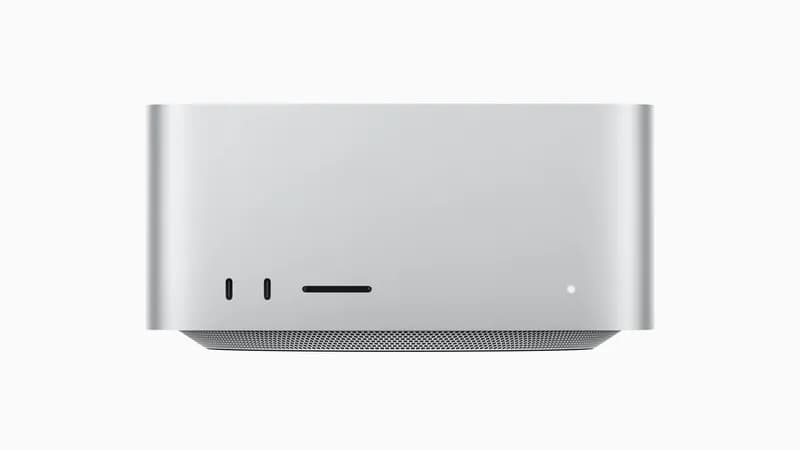
On June 1, 2026, NVIDIA used its Computex / GTC Taipei keynote to unveil the RTX Spark — a consumer Windows PC built on the new N1X superchip, with up to 128GB of unified memory and roughly a petaflop of FP4 AI compute. It's the first time NVIDIA's Grace-Blackwell "personal AI supercomputer" architecture has been aimed squarely at mainstream Windows buyers rather than Linux developers.
There's one catch that most of the coverage buries: it doesn't ship until fall 2026. So if you're a prosumer or indie developer shopping for a 128GB-class machine to run 70B models locally, the real question isn't "RTX Spark or DGX Spark" in the abstract — it's "do I wait six months for the RTX Spark, or buy something that ships today?" This guide answers both.
The bottom line: The NVIDIA RTX Spark is a consumer Windows PC built on the N1X superchip — a 20-core Arm Grace CPU paired with a Blackwell GPU and up to 128GB of unified LPDDR5X memory — that ships fall 2026 from a rumored ~$2,899; unlike the Linux-based DGX Spark developer workstation, it targets personal AI agents on Windows. For buyers who need a 128GB local-AI machine today, an Apple Mac Studio M4 Max (up to 192GB) or a Strix Halo mini PC (from ~$1,499) is the closest shipping alternative.
What Is the NVIDIA RTX Spark? (TL;DR + Spec Box)
The RTX Spark is a family of consumer desktops and laptops powered by NVIDIA's N1X (and lower-tier N1) superchip — a System-on-Chip that fuses an Arm-based Grace CPU with a Blackwell GPU on a single package with shared, unified memory. It's the same architectural idea as Apple Silicon — one pool of memory both the CPU and GPU can read — but with NVIDIA's CUDA stack and FP4 tensor cores attached.
| Spec (N1X top config) | NVIDIA RTX Spark |
|---|---|
| SoC | N1X superchip (Grace-Blackwell lineage) |
| CPU | 20-core Arm Grace |
| GPU | Blackwell, 6,144 CUDA cores, 5th-gen Tensor cores (FP4) |
| Unified Memory | Up to 128GB LPDDR5X |
| Interconnect | 600 GB/s NVLink-C2C (CPU↔GPU) |
| AI Compute | ~1 petaflop FP4 |
| OS | Windows (agentic-AI focused) |
| Ship partners | ASUS, Dell, HP, Lenovo, Microsoft Surface, MSI |
| Availability | Fall 2026 (official) |
| Price | Rumored ≥ ~$2,899 (N1X) / ≥ ~$1,799 (N1) — needs verification |
According to Tom's Hardware, which covered the unveiling, the N1X top configuration pairs the 20-core Grace CPU with a Blackwell GPU carrying 6,144 CUDA cores and delivers roughly a petaflop of FP4 compute. NVIDIA's own newsroom framed the launch as "reinventing Windows PCs for the age of personal AI," emphasizing on-device agents rather than datacenter workloads. (See NVIDIA Newsroom and the Tom's Hardware writeup for the full spec sheet.)
The headline number for local-AI buyers is the 128GB of unified memory. That, combined with FP4 tensor cores and a Windows-native software story, is what makes the RTX Spark interesting — and what makes "should I wait?" a real question rather than a rhetorical one.
RTX Spark vs DGX Spark: The Real Difference
Because the names are nearly identical, the two get conflated constantly. They're not the same machine, and they're not even for the same person.
| Dimension | RTX Spark (N1X) | DGX Spark (GB10) |
|---|---|---|
| Audience | Consumers, prosumers, gamers | ML developers, researchers |
| OS | Windows | Ubuntu Linux (DGX OS) |
| Primary mission | Personal AI agents + gaming + creative | 24/7 inference, fine-tuning, CUDA dev |
| Architecture | Grace-Blackwell (N1X) | Grace-Blackwell (GB10) |
| Unified memory | Up to 128GB LPDDR5X | 128GB LPDDR5X |
| Sustained AI speed | Baseline (consumer thermals) | ~20–30% faster (estimate — better binning/thermals) |
| Software stack | Windows + CUDA + DirectML | CUDA, TensorRT-LLM, NeMo, NVIDIA AI Enterprise |
| Ships | Fall 2026 | Available now |
| Price | Rumored ≥ ~$2,899 | ~$4,699 |
The short version: the DGX Spark is a tuned Linux workstation for people who already know they need CUDA — fine-tuning with NeMo, serving with TensorRT-LLM or vLLM, running 24/7. The RTX Spark is a Windows PC for people who want a personal AI machine that also games and runs creative apps. Same chip family, different mission, different thermal envelope. Early estimates put the DGX Spark roughly 20–30% ahead on sustained inference because of better binning and cooling — but treat that as an estimate, since no independent RTX Spark benchmarks exist yet (it's pre-release).
If you want the full DGX Spark deep-dive — including how it stacks up against the Mac Studio on real inference benchmarks — see our DGX Spark vs Mac Studio M4 Max comparison. The rest of this guide focuses on the question that post doesn't answer: what a consumer buyer should do right now.
Price and Availability: Why "Wait" Has a Real Cost
Here's the uncomfortable math. NVIDIA officially confirmed a fall 2026 ship window — that part is solid, straight from the keynote and the partner list (ASUS, Dell, HP, Lenovo, Microsoft Surface, MSI). What's not confirmed is the price.
Leak coverage from VideoCardz and Wccftech suggests N1X-based systems will start above ~$2,899, with lower-tier N1 laptops from ~$1,799. Both numbers are rumored and need verification — NVIDIA has published no MSRP. (See VideoCardz's pricing report.)
So the cost of waiting isn't just dollars — it's time. If you buy nothing now, you spend the next four-to-six months without a local-AI machine, paying cloud API fees or making do with a memory-starved GPU, on the bet that a ~$2,900+ Windows box lands on schedule at a price NVIDIA hasn't committed to. For someone who'll run inference daily, that's a real opportunity cost. The alternative — buy a shipping machine now, sell or repurpose it later if the RTX Spark proves worth it — often pencils out better than idle waiting.
What 128GB of Unified Memory Actually Buys You
The entire RTX Spark value proposition rests on that 128GB number, so it's worth being precise about what it unlocks. Local LLM inference is gated by one thing above all: can the model fit in fast memory? If it fits, you get usable tokens per second; if it doesn't, you offload to slow system RAM or disk and speed collapses.
A rough rule of thumb for memory needed at Q4 quantization is "a bit over half the parameter count in GB." That maps cleanly to the 70B-class models people actually want to run:
| Model | Approx. memory (Q4) | Fits in 128GB? | Fits in 32GB GPU? |
|---|---|---|---|
| Llama 4 Maverick 70B | ~40GB | ✅ With room for big context | ❌ Must offload |
| DeepSeek R1 70B | ~40GB | ✅ Yes | ❌ Must offload |
| Qwen 3 72B | ~42GB | ✅ Yes | ❌ Must offload |
| Llama 4 Scout 8B | ~5GB | ✅ Trivially | ✅ Yes |
This is the crux of the whole product class. A 32GB discrete GPU like the RTX 5090 is brutally fast on anything that fits in its VRAM, but a 70B model at Q4 doesn't fit — so it spills into system RAM and you lose most of the speed advantage. A 128GB unified-memory machine holds the full 70B model plus a long context window and KV cache with headroom to spare. That's the gap the RTX Spark, the DGX Spark, the Mac Studio, and Strix Halo mini PCs all aim to close. For a deeper treatment of sizing memory to models, see our how much RAM you need for local AI guide.
One nuance: many modern 70B-class releases are Mixture-of-Experts models that activate only a fraction of their parameters per token, which improves speed-per-GB — but you still need enough memory to hold all the weights at once, so the capacity math above stands.
Buy-Now Alternatives That Ship Today (The Core Decision)
If you've decided four-to-six months is too long to wait, here are the machines that hit the 128GB-class local-AI brief — or a sensible rung below it — and ship right now.
Closest equivalent: Apple Mac Studio M4 Max (up to 192GB unified)
The Mac Studio M4 Max ($1,999 – $5,999) is the single closest shipping analogue to the RTX Spark — and in one important way it's ahead: it can be configured with up to 192GB of unified memory, more than the RTX Spark's 128GB ceiling. It's silent, draws little power, and runs the most mature consumer local-AI stack going: MLX, Ollama, and llama.cpp with Metal acceleration all "just work."
As Simon Willison has repeatedly noted in his local-AI coverage, "The MLX ecosystem on Apple Silicon has matured dramatically — for most inference use cases, the developer experience is genuinely better than wrestling with CUDA drivers." The trade-off versus a future RTX Spark: no CUDA and no gaming. If your workload is inference-first and you value silence and memory capacity, the Mac Studio is the primary buy-now pick. It's the spine of our Apple Silicon for AI hub, and we compare it head-to-head with a discrete card in our RTX 5090 vs Mac Studio breakdown.
Cheapest 128GB path: Strix Halo mini PCs (from ~$1,499)
If 128GB on the tightest budget is the goal, AMD's Strix Halo (Ryzen AI Max+ 395) mini PCs are the value play — the GMKtec EVO X2 lands around $1,499 with 128GB of unified memory, roughly half the rumored RTX Spark price. Community benchmarking on the Level1Techs Strix Halo thread shows it comfortably running 70B-class models at usable speeds. We cover this route in depth in our Strix Halo mini PC for local AI guide — it's the cheapest credible "128GB now" option on the market.
If you want to start smaller and cheaper in the same mini-PC family, the GMKtec M6 Ultra ($429 – $549) — Ryzen 7 7640HS with 32GB DDR5 — is a sub-$550 entry rung that handles 7B–13B models well today. It won't run 70B, but it's a low-risk way to start local AI now and step up to a big-memory box later. (Note: this is a sub-128GB machine — position it as an entry point, not a Spark substitute.) See our mini PC for AI hub for the full lineup.
Discrete-GPU path: RTX 5090 (32GB) for CUDA-first builds
If CUDA, training flexibility, or gaming-plus-AI in a desktop you build yourself matters more than raw memory capacity, the RTX 5090 ($1,999 – $2,199) is the discrete-GPU answer. Its 32GB of GDDR7 and Blackwell 5th-gen tensor cores make it the fastest consumer card available on anything that fits in VRAM — it posts roughly 18 tok/s on Llama 3 70B Q4 (with offload) and dominates smaller models (source: LM Studio Community — needs verification).
The honest caveat: 32GB is the constraint. A 70B model at Q4 doesn't fully fit, so you offload and lose speed — exactly the problem a 128GB unified machine solves. Buy the RTX 5090 if you want a CUDA-native, upgradeable box and you mostly run models up to ~32GB; choose unified memory if 70B-class capacity is the point. For where it sits against datacenter cards on the memory question, see our comparison pages for RTX 5090 vs A100 80GB and RTX 5090 vs H100.
Budget entry: Mac Mini M4 Pro (start now, scale later)
Not everyone needs 70B today. The Mac Mini M4 Pro ($1,399 – $1,599) gives you silent Apple-silicon local AI with 24GB of unified memory — enough for 7B–13B models, AI coding assistants, and always-on agents. It's the lowest-cost way into the macOS local-AI ecosystem, and a sensible "buy now, decide on the big machine later" hedge while RTX Spark pricing and reviews firm up. It pairs naturally with the Mac Mini cluster approach if you want to scale memory by adding nodes rather than buying one expensive box.
RTX Spark vs Mac Studio vs Strix Halo vs RTX 5090: Decision Table
Here's the whole field on one screen — the skimmable centerpiece.
| Machine | Memory | OS | Ecosystem | Ships | Price | Best for |
|---|---|---|---|---|---|---|
| RTX Spark (N1X) | Up to 128GB unified | Windows | CUDA + DirectML | Fall 2026 | ~$2,899+ (rumored) | Windows + CUDA + gaming in one box, if you can wait |
| DGX Spark (GB10) | 128GB unified | Linux | CUDA / TensorRT-LLM / NeMo | Now | ~$4,699 | Tuned Linux ML workstation, fine-tuning, 24/7 serving |
| Mac Studio M4 Max | Up to 192GB unified | macOS | MLX / Ollama / Metal | Now | $1,999 – $5,999 | Max memory + silence today, inference-first |
| Strix Halo mini PC | 128GB unified | Windows / Linux | ROCm / Vulkan / llama.cpp | Now | ~$1,499 | Cheapest 128GB local AI right now |
| RTX 5090 build | 32GB VRAM | Windows / Linux | CUDA (full) | Now | $1,999 – $2,199 (GPU) | Fastest on ≤32GB models, CUDA training, gaming |
Three things jump out. First, the Mac Studio already beats the RTX Spark on memory capacity (192GB vs 128GB) and ships today. Second, Strix Halo undercuts the rumored RTX Spark price by roughly half for the same 128GB. Third, the RTX Spark's genuine differentiator isn't capacity — it's Windows + CUDA + gaming in a single unified-memory machine, which nothing else on this list delivers. That's the bet you're waiting for.
Who Should Wait for RTX Spark — and Who Shouldn't
Concrete decision rules, no hedging:
- Wait for the RTX Spark if: you specifically want Windows + the full CUDA stack + gaming/creative in one unified-memory box, you can comfortably hold until fall 2026, and you're prepared for a rumored ~$2,900+ price that NVIDIA hasn't confirmed. This is the one configuration nothing shipping today replicates.
- Buy a Mac Studio M4 Max now if: you want the most unified memory available (up to 192GB), silent operation, and a mature inference stack — and you don't need CUDA or Windows. This is the strongest buy-now pick for inference-first users.
- Buy a Strix Halo mini PC now if: you want 128GB local AI on the smallest budget (~$1,499) and are comfortable with the AMD ROCm/Vulkan path. See the Strix Halo guide.
- Buy an RTX 5090 now if: CUDA training, discrete-GPU flexibility, and gaming matter more than 70B capacity, and you mostly run models up to ~32GB. Pair it with our AI GPU buying guide.
- Buy a Mac Mini M4 Pro now if: you're starting out, run 7B–13B models, and want the cheapest way into silent local AI while you watch how RTX Spark pricing and reviews land.
This is the same "should you wait?" logic we applied to the delayed RTX 50 Super launch — and the conclusion rhymes. See our RTX 50 Super delay analysis for the proven version of this framework: a confirmed-but-distant launch rarely beats a good machine in hand, unless it delivers something genuinely unique. For the RTX Spark, that unique thing is Windows-plus-CUDA-plus-128GB — valuable to a specific buyer, irrelevant to most.
Final Take
The RTX Spark is a real and interesting machine: it brings NVIDIA's Grace-Blackwell unified-memory architecture to mainstream Windows for the first time, with up to 128GB and a petaflop of FP4 compute, shipping fall 2026 from every major PC maker. But "interesting in fall" doesn't help a buyer who wants to run DeepSeek R1 70B this quarter.
For most people reading this, the answer is to buy a shipping machine now and stop waiting: a Mac Studio M4 Max if you want maximum memory and silence, a Strix Halo mini PC if you want 128GB cheapest, an RTX 5090 if you want CUDA and gaming, or a Mac Mini M4 Pro if you're just getting started. Reserve the wait for the one buyer the RTX Spark is actually built for — the Windows user who wants CUDA and a 128GB personal-AI box in a single machine, and has the patience to hold until fall.
We'll update this guide the moment NVIDIA confirms official RTX Spark pricing and independent benchmarks land.
Frequently Asked Questions
Is the RTX Spark better than the DGX Spark?
They target different users, so 'better' depends on your workflow. The RTX Spark is a consumer Windows PC built on the N1X superchip for personal AI agents, gaming, and creative work — it ships fall 2026. The DGX Spark is a Linux developer workstation on the same Grace-Blackwell lineage, tuned for 24/7 inference and fine-tuning, and early estimates suggest it runs roughly 20–30% faster on sustained AI workloads thanks to better binning and thermals (estimate — no independent RTX Spark benchmarks exist yet). If you want Windows plus CUDA in one box, the RTX Spark is the better fit; if you need a tuned Linux ML workstation today, the DGX Spark wins.
How much will the RTX Spark cost?
NVIDIA has not published official RTX Spark pricing. Leak coverage from VideoCardz and Wccftech suggests N1X-based systems will start above ~$2,899, with lower-tier N1 laptops from ~$1,799 — both figures are rumored and need verification. By comparison, the machines that ship today and hit the same 128GB-class local-AI niche are the Apple Mac Studio M4 Max (from $1,999, up to 192GB unified) and Strix Halo mini PCs (from roughly $1,499 for 128GB).
When does the RTX Spark release?
NVIDIA officially confirmed a fall 2026 ship window at Computex 2026 (announced June 1, 2026), with systems coming from ASUS, Dell, HP, Lenovo, Microsoft Surface, and MSI. The ship window and partner list are official; pricing and final specs are not. That means a buyer who needs a 128GB local-AI machine before fall faces a real four-to-six-month wait with no product in hand.
Can the RTX Spark run 70B models?
Yes — that's the entire point of the 128GB unified-memory configuration. A 70B model quantized to Q4 needs roughly 40GB, so 128GB leaves plenty of headroom for the model weights plus a large context window and KV cache. That covers Llama 4 Maverick 70B, DeepSeek R1 70B, and Qwen 3 72B at Q4. A 32GB discrete GPU like the RTX 5090 cannot hold a 70B model in VRAM and has to offload to system RAM, which slows inference dramatically.
RTX Spark vs Mac Studio for local AI — which should I buy?
If you need a 128GB-class local-AI machine today, the Mac Studio M4 Max is the closest shipping equivalent: it offers up to 192GB unified memory (more than the RTX Spark's 128GB ceiling), runs silent, and has a mature MLX/Ollama/llama.cpp stack. Buy the Mac Studio now if you want maximum memory and silence immediately. Wait for the RTX Spark if Windows, CUDA, and gaming in a single box matter more to you than getting started this quarter — and you can hold until fall 2026.